A normal A/B test makes you choose who sees what, then forces one winner on everyone. CustomFit's machine-learning engine decides in real time — reading hundreds of signals the moment a visitor lands and serving the variation most likely to convert that person. Not one winner. A winner per visitor.

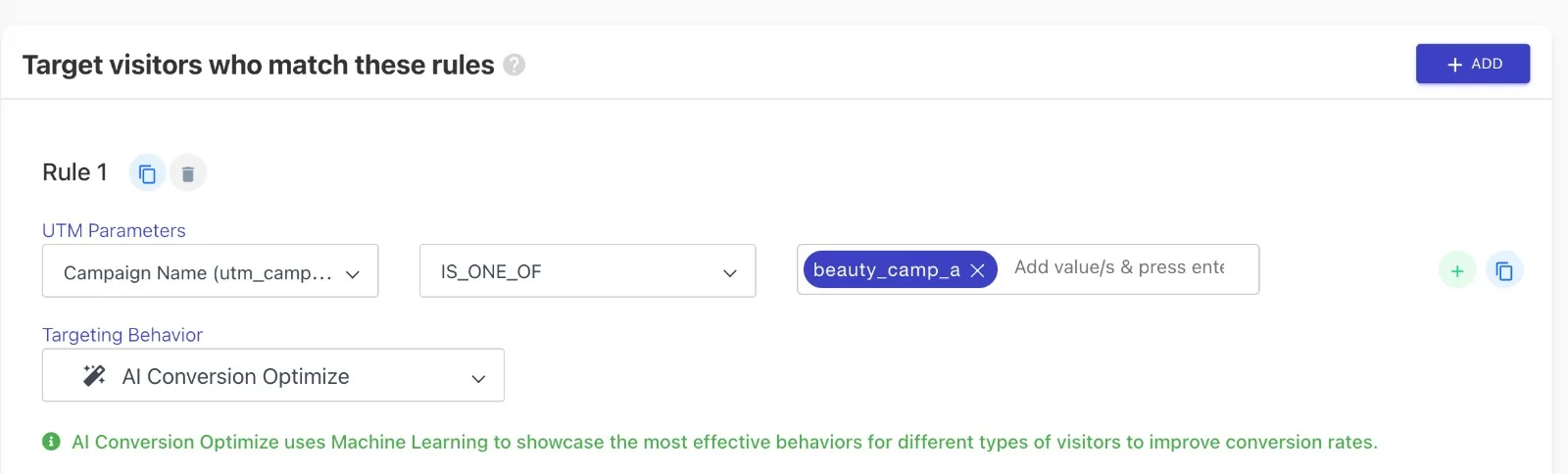
Pick AI Conversion Optimize as the targeting behavior — the engine handles the rest.
Every visitor is served the variation most likely to convert them — not one winner forced on the whole audience.
Source, geo, device, day, time, month timing, new vs returning — combined into a live context the instant someone lands.
It keeps exploring, constantly checks itself against the control, and falls back automatically if the default does better.
Classic A/B testing ends by picking a single winner and rolling it out to 100% — burying every segment that quietly preferred a different variation. AI Conversion Optimization removes the trade-off.
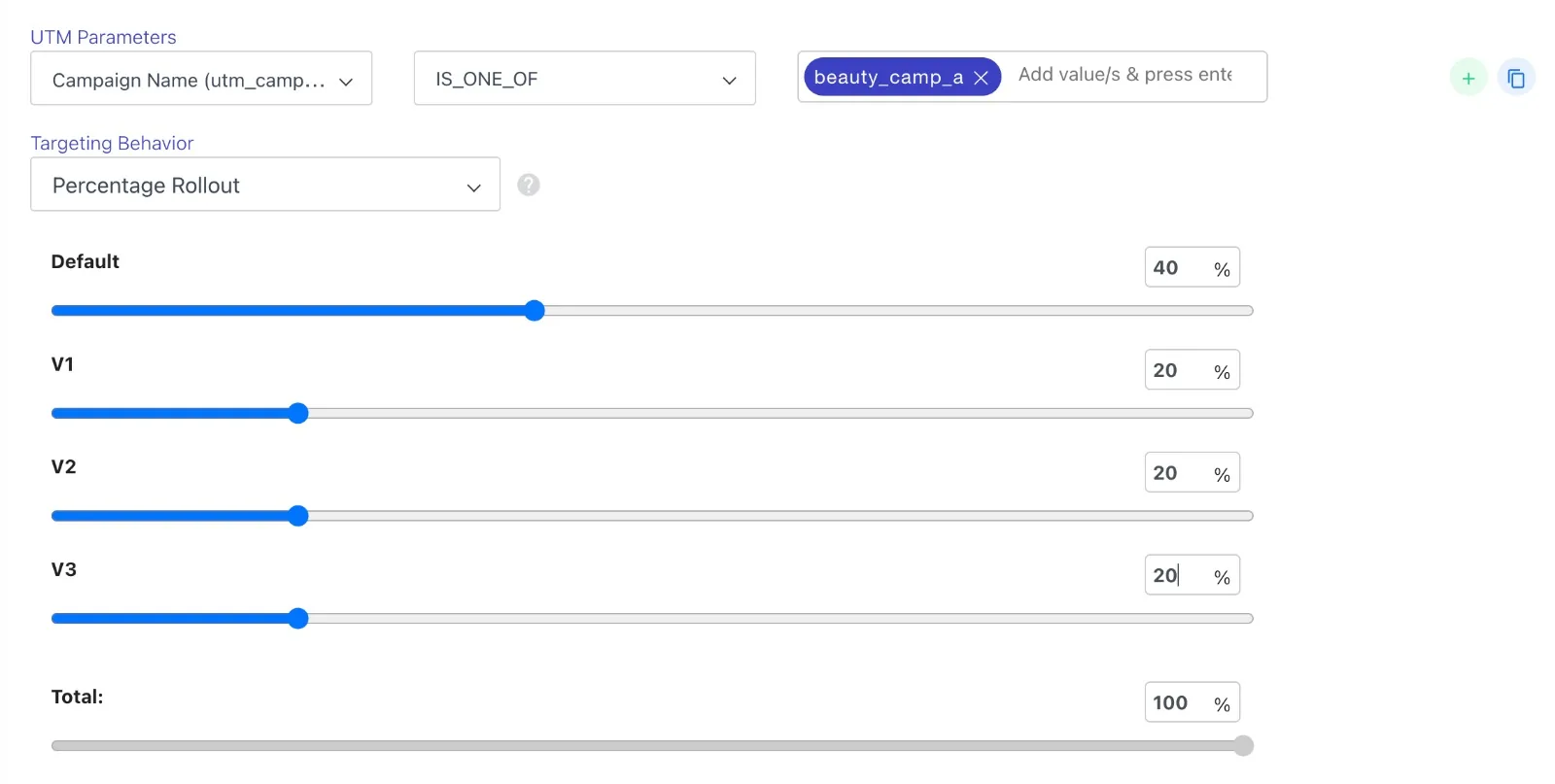
You set 30 / 30 / 40, wait for significance, then roll the winner out to everyone — including the people it doesn't suit.
Each visitor is matched in real time to the variation most likely to convert them. Different people, different winners, at the same time.
Target the visitors you want with the usual rules — UTM, geography, device, audience — then choose how traffic is allocated. Set the split yourself with Percentage Rollout, or hand it to the engine with AI Conversion Optimize. Same setup, one dropdown apart.

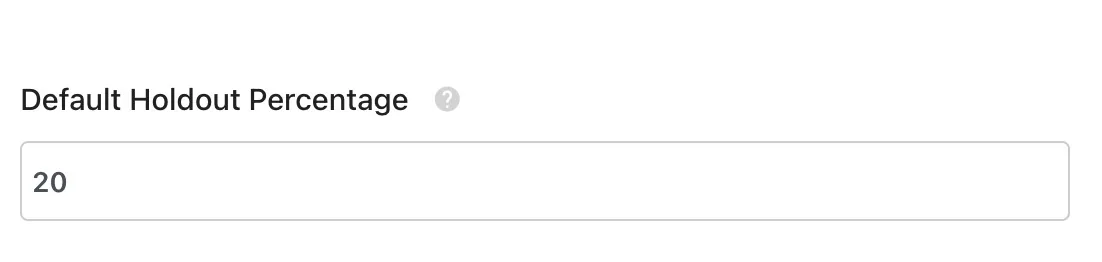
Percentage Rollout — you decide the split (Default 40 / V1·V2·V3 20) and later ship one winner to everyone.

AI Conversion Optimize — the engine allocates the best-fit variation per visitor. No split to set, no winner to force.
Five steps, every time, in a few milliseconds — repeating and improving with every visitor.
Someone lands on a page in a live experiment. The engine wakes before first paint.
Hundreds of signals are read and combined into a live profile of this exact visitor.
The model scores each variation's probability of converting this visitor.
The highest-probability variation renders instantly — no flicker, no delay.
The outcome feeds back in, sharpening the next decision for visitors like them.
No two visitors are the same. The engine reads who's actually in front of you — then decides accordingly.
This isn't a black box gambling with your traffic. The engine balances exploration and exploitation, and never stops checking itself against your original page. If it isn't winning, it steps aside — automatically.

The optimization isn't a single global setting. Because each experiment has a different audience and different changes, it learns fresh — and gets to a confident allocation fast.
Different audience, different variations — so each experiment trains on its own data, not a global average.
It moves through its initial learning phase quickly, then shifts into confident, conversion-maximizing allocation.
The goal isn't to crown a winner — it's to maximize conversions by showing each visitor what works for them.
AI conversion optimizationis a self-optimizing form of experimentation. Instead of you manually splitting traffic and later rolling out one winning variation to everyone, CustomFit's machine-learning engine evaluates every visitor in real time and serves the variation most likely to convert that specific person — so each visitor effectively gets their own winner, and the experiment optimizes continuously toward conversions.
Not one winner for everyone — the right variation for each visitor, decided automatically.
We stopped arguing over which variation to roll out to 100%. The engine just gives every visitor the one that works for them — and our conversion rate climbed without us touching the split.
AI conversion optimization is a self-optimizing alternative to manual A/B testing. In a traditional test, you create variations, decide the traffic split yourself, wait for a winner, and then roll that single winner out to everyone — which quietly penalizes every segment of your audience that would have converted better on a different variation.
CustomFit replaces that with real-time, per-visitor allocation. The moment a visitor lands, the engine captures hundreds of signals — traffic source, campaign, geography, device, day of week, time of day, time of month, new vs returning, customer status, on-site behavior, and more — and blends them into a live context. A machine-learning model then predicts each variation's probability of converting that exact visitor and serves the highest one. Different visitors can see different winners at the same time.
It's bold but not reckless. The engine balances exploration (keeping a slice of traffic learning) with exploitation (sending the rest to the best-known variation), and it continuously compares its own allocation against the control. If the default page is doing better, allocation automatically falls back to it — so you can't lose to the AI. And because every experiment has a different audience and different changes, each one trains its own model, reaches a confident allocation quickly, and optimizes toward a single goal: more conversions, for every visitor, automatically.
A manual A/B test ends with one winner shipped to 100% of visitors, burying the segments that preferred a different variation. AI conversion optimization allocates the best variation per visitor, so different people see different winners at the same time — all optimized toward conversions.
At the moment of arrival it captures hundreds of signals — source, campaign, geo, device, day, time, time of month, new vs returning, customer status, behavior — forms a live context, predicts each variation's conversion probability for that visitor, and serves the highest one.
It's guardrailed. A slice of traffic keeps exploring while the majority exploits the best-known variation, and the engine constantly compares itself to the control. If the control is doing better, it automatically falls back to the default — so you never lose to the AI.
Yes. Each experiment has a different audience and different changes, so the model trains fresh per experiment, moves through a short learning period quickly, and then optimizes for that experiment's conversions.
No. Marketers build variations and launch self-optimizing experiments in a no-code visual editor; developers can use the API and SDKs when they want deeper control.
Other ways teams lift conversions with CustomFit.
Launch a self-optimizing experiment and let CustomFit's engine convert each visitor with the variation that fits them — guardrailed, and live in minutes.