From the conversion glossary
Concepts referenced in this article, defined.
Concepts referenced in this article, defined.
Run rigorous A/B tests and personalize every visit on Shopify or any storefront — no engineers required.
The mini-cart (a slide-out drawer or popup) keeps shoppers on the product page after adding an item, while the full cart page redirects them to a dedicated cart view. Both formats have their place — but choosing the wrong one for your product type and purchase behavior costs you real conversions. The answer is not one-size-fits-all; it requires testing against your actual traffic.
A mini-cart appears as a side panel, overlay, or floating widget when a shopper clicks "Add to Cart." It shows:
The shopper never leaves the product page. This is intentional: it keeps the browsing momentum alive and allows them to continue shopping or accept an upsell before heading to checkout.
A full cart page is a standalone page (typically /cart) that shoppers are redirected to after adding a product. It provides more space for:
The redirect interrupts browsing but gives shoppers a clear "pause and review" moment before committing to checkout.
The mini-cart converts better in these scenarios:
Single-product, impulse purchases. Brands like mCaffeine (face wash, serum) and Plum (sunscreen, toner) sell products that shoppers decide on quickly. Redirecting them to a full cart page creates an unnecessary pause in the buying momentum. A mini-cart lets them checkout in 2 taps.
High browse frequency. If your average shopper views 4+ products per session (common in beauty, fashion, and supplements), a mini-cart lets them keep adding items without interruption. Every redirect to a full cart page is a potential exit point.
Mobile traffic. On mobile, page loads take time. A mini-cart that opens instantly within the current page loads faster and feels more natural than a full-page redirect.
Lower-priced products (under ₹500). When the purchase risk is low, shoppers do not need the full cart review experience. A quick confirmation in the mini-cart is enough.
The full cart page converts better in these scenarios:
High-consideration, higher-priced products. Products above ₹1,500 — furniture, electronics accessories, premium skincare sets — benefit from the full cart page. Shoppers want to review their selection carefully before paying.
Multi-item orders. When shoppers buy 3–5 SKUs, seeing everything laid out on a full page with a clear total feels more trustworthy than a compact drawer.
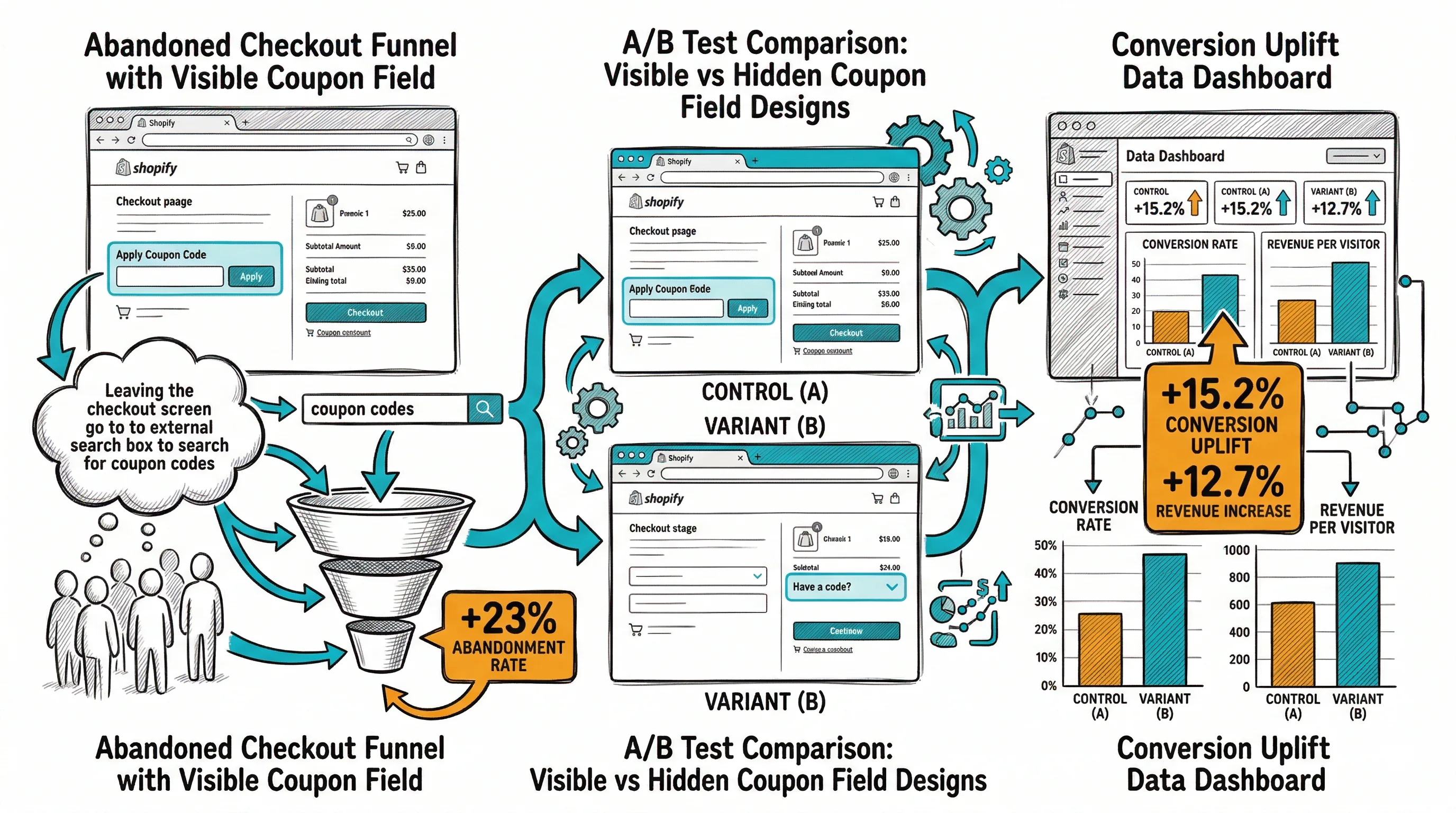
Coupon code use. The coupon code field converts better when it is prominent on a full cart page. Burying it in a mini-cart drawer leads to lower coupon redemption and more checkout abandonments from shoppers who were searching for a code.
Cross-sell heavy catalogues. Full cart pages provide more space for "Frequently bought together" or "Complete your routine" sections. Kapiva's full cart page showing Ayurvedic supplement pairings reportedly contributed to their 9.48% CVR improvement.
The only definitive answer for your store is a controlled test. Here is how to run one:
With CustomFit.ai, you can test mini-cart vs full cart redirect behavior without touching your Shopify theme code.
Many high-converting Shopify stores use a hybrid:
This hybrid approach does not force a choice. It routes impulse buyers to checkout fast while giving deliberate shoppers the full review experience they want.
Related reading: