CRO Playbook · Mobile CVR
Mobile-First — fix the small screen.
Mobile is 70%+ of D2C traffic. Test sticky bars, tap targets, and mobile-specific copy to close the mobile conversion gap.
6 experiments ~7 days to run No-code
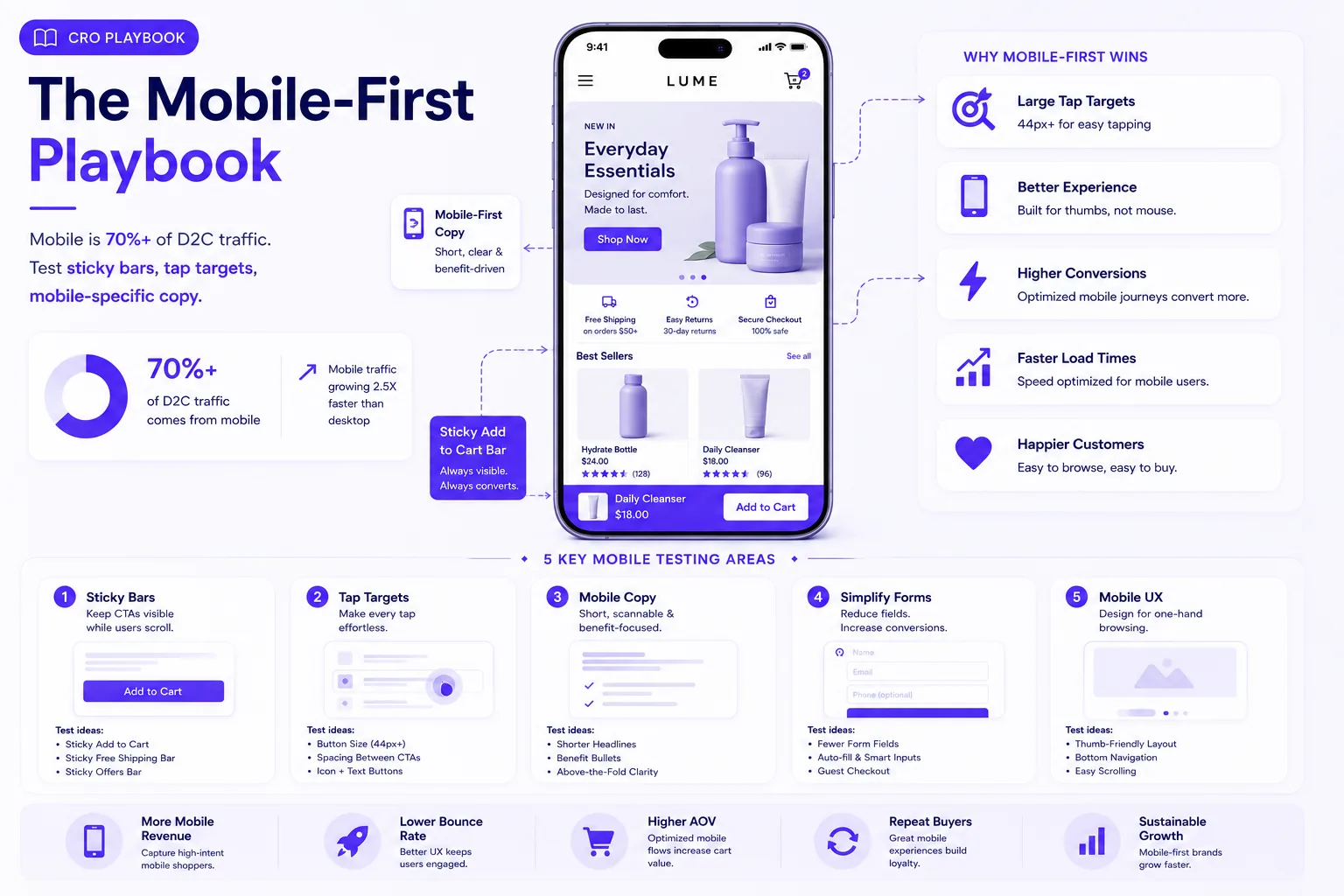
Mobile is 70%+ of D2C traffic. Test sticky bars, tap targets, and mobile-specific copy to close the mobile conversion gap.
This is your product page rebuilt for the thumb. Highlighted blocks fix the small-screen realities — reachable buttons, a shorter scroll, and wallet-first checkout.
Reachable buttons, generous tap targets, and a checkout built for one hand.
Collapsed sections and wallet-first checkout cut the mobile scroll and steps.
Apple Pay and Google Pay surface first to skip typing on a phone.
6 experiments in this playbook — here are the highest-impact tests to start with. Each is a ready-to-run recipe with a hypothesis and a target metric.
Estimated lift ranges are typical results across comparable D2C stores — your numbers depend on traffic, vertical, and baseline.
Most stores are designed on desktop and lose money on mobile. This playbook fixes the small-screen experience — reachable buttons, shorter scrolls, and wallet-first checkout — where the majority of your traffic actually shops.
Skim the experiments and pick the one that maps to your biggest gap.
Each test states the change, the audience, and the metric it moves.
Recreate the variant in the CustomFit visual editor in minutes.
Ship as an A/B test and watch lift against real revenue.
Our mobile converted at half our desktop rate. Wallet-first checkout and a sticky buy bar closed most of that gap in a week.
Exit-intent, cart-abandonment, and WhatsApp reminders working together to recover 15–30% more…
Turn one-time buyers into subscribers with the right copy, offers, and frequency tests — and …
Free-shipping bands, smart bundles, and post-purchase upsells — every average-order-value pla…
The Mobile-First Playbook addresses the biggest blind spot in most D2C stores: a site designed and reviewed on desktop while the majority of customers shop on a phone. The result is a mobile conversion rate well below desktop — and a large, recoverable revenue gap.
The plays target the realities of the small screen: reachability (sticky add-to-cart and thumb-sized tap targets), scroll length (collapsed accordions and single-column layouts), and checkout friction (express wallets surfaced first so shoppers never type on a phone).
Each test is built and previewed mobile-first in CustomFit without code, targets mobile sessions specifically, and reports mobile conversion lift — so you optimize for where your traffic actually is.
Yes. CustomFit targets device type, so every play in this playbook can be scoped to mobile sessions while desktop stays untouched.
All 6 experiments in this playbook are detailed on this page, in priority order — start at the top and work down.
No. Every experiment recreates as a no-code experience in the CustomFit visual editor; developers can use the API and SDKs when they want deeper control.
Most teams install CustomFit in minutes via a single script tag or the Shopify app and ship the first test in this playbook the same week.
Join 2,400+ D2C brands shipping smarter experiments on CustomFit.ai — recreate any play in minutes, no code.