From the conversion glossary
Concepts referenced in this article, defined.
Concepts referenced in this article, defined.
Run rigorous A/B tests and personalize every visit on Shopify or any storefront — no engineers required.
Social proof is the most powerful force in ecommerce conversion — and reviews are its primary vehicle. A product page with 50 genuine, specific reviews converts at 15–25% higher rates than an identical page with zero reviews. Yet most D2C brands treat reviews as a passive outcome of good products rather than an active business strategy. Here is how to build a reviews system that generates consistent, high-quality social proof and measurably improves your conversion rate.
Consider what happens when a customer lands on your product page:
Authentic reviews answer all three questions better than any copy you write yourself. They are third-party validation from people with no incentive to sell.
The data is consistent:
For Indian D2C brands, this matters even more because many customers lack the offline touchpoint that builds brand familiarity. Reviews substitute for the "see it in store" experience.
For Shopify D2C brands, the main options:
Loox: Photo-first review platform. Excellent for visual categories (beauty, fashion, food). Strong Instagram-style photo layout. ₹1,500–4,000/month.
Okendo: Powerful segmentation, attribute-based reviews (skin type, size, fit). Best for D2C brands with complex product ranges. ₹2,500–8,000/month.
Judge.me: Cost-effective, good automation, decent customization. Best for bootstrapped brands. ₹0–1,200/month.
Yotpo: Enterprise-grade, integrates with loyalty programs and SMS. For brands at scale. ₹8,000+/month.
Which to choose: If you sell beauty or fashion, Loox's photo focus is worth the premium. For most categories, Judge.me gives you 80% of the functionality at 20% of the cost.
Manual review requests do not scale. Set up:
Email request (Day 14 post-delivery): Subject: "How is your [product name] working for you?" Body: 3–4 sentences. Ask specifically about the customer's experience. Link directly to the review form — do not make them navigate to find it.
WhatsApp request (Day 10 post-delivery): "Hi [Name], your [product] arrived 10 days ago — how is it? We'd love to hear! Leave a quick review here: [link]. As a thank-you, here's ₹50 off your next order: [code]"
WhatsApp gets 5–8x higher response rates than email for Indian audiences. Invest in WhatsApp automation (Interakt, AiSensy, or similar).
The timing that works: Day 10–14 is the sweet spot for most products. Too early (day 3) and customers have not formed a full opinion. Too late (day 30) and the purchase is old news.
Every added step in the review submission process reduces completion rates. The review flow should take under 60 seconds:
Requiring account creation to leave a review is the single biggest friction point to eliminate. Allow guest reviews.
A photo review is worth 5–10 text-only reviews in terms of conversion impact. Offer:
The additional incentive for photos consistently pays back through improved conversion rates.
Most review forms just ask for a rating and open-ended comments. You can do better with structured prompts:
For skincare: "What is your skin type? How long did you use the product before noticing results? What changed about your skin?"
For fashion: "What size did you order? Does it fit true to size? What occasion did you wear it to?"
For supplements: "What health goal were you targeting? What changes did you notice and when?"
Structured prompts generate the specific, useful reviews that actually reduce purchase hesitation for future customers.
Getting reviews is half the work. Displaying them effectively is the other half.
Above the fold: Show your star rating and total review count in your product title area. This is seen before customers scroll and immediately establishes credibility.
After product description: Full review section with photos, filters, and sorting.
Near the CTA: A brief quote from your best review placed near the "Add to Cart" button captures attention at the decision moment.
Checkout page: A static featured review on the checkout page reduces abandonment by maintaining confidence at the final moment.
Give customers the ability to filter reviews by:
Customers who can find reviews from people like them convert at significantly higher rates than customers who must read through all reviews to find relevant ones.
Always show "Verified Purchase" badges on reviews. In India, where awareness of fake reviews is high (especially post Amazon and Nykaa controversies), the verified badge is a meaningful trust signal.
Negative reviews are inevitable. Your response strategy matters more than the review itself.
Respond within 24 hours: A quick response shows you are attentive.
Acknowledge, do not dismiss: "We are sorry to hear the product did not meet your expectations" — always start with empathy.
Offer a resolution: "Please contact us at [email] and we will make this right" — or better, reach out proactively to the reviewer.
Do not argue: Even when the reviewer is factually wrong, public arguments damage your brand more than the negative review.
Example response to a 2-star review ("Did not see any difference after 2 weeks"):
"Thank you for sharing your experience, [Name]. For most skin types, our vitamin C serum shows results at 4–6 weeks with consistent morning use. We'd love to help you get the best results — please reach out to our skincare team at [email] and we'll advise on your routine. If you're still not happy at 6 weeks, we'll make it right."
This response:
Brands that respond to 100% of negative reviews consistently see higher overall trust scores than those that ignore them.
Reviews on your website are just one channel. Build a broader social proof ecosystem:
Google Business Profile reviews: Rank in local and branded searches. Ask satisfied customers to leave a Google review — a different segment than typical ecommerce reviewers.
Nykaa and Amazon reviews: If you sell on marketplaces, your review count there affects your visibility ranking. Encourage purchasers to review on the platform they bought from.
Instagram tags and UGC: Create a branded hashtag. Feature customer photos on your product pages (with permission). This social proof feels more authentic than any review format.
Video testimonials: For high-AOV products, video testimonials on product pages dramatically increase conversion. Even short WhatsApp videos from satisfied customers work.
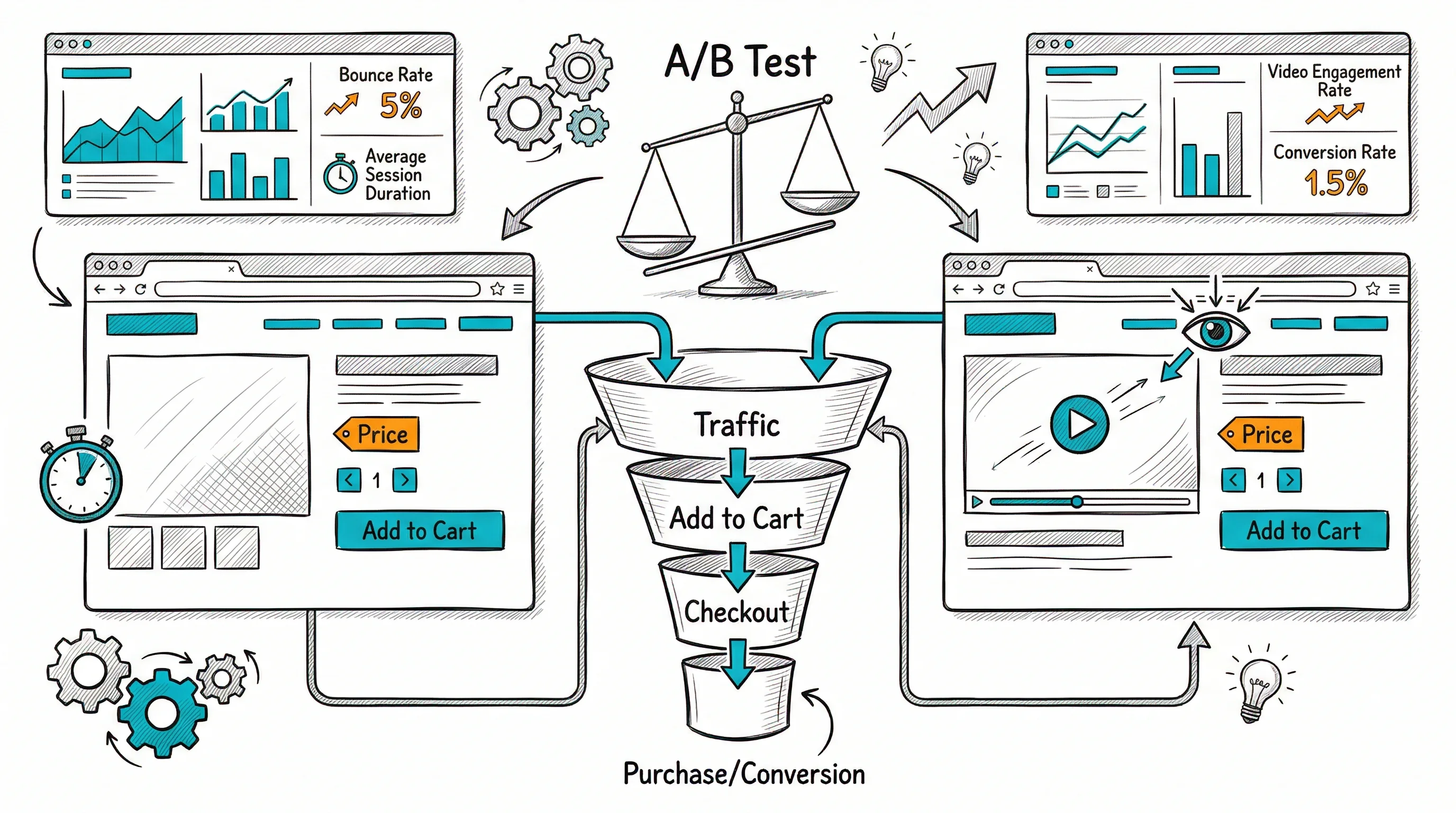
Use A/B testing to optimize how reviews appear on your product pages. Test:
CustomFit.ai lets you run these tests on Shopify without developer work, helping you find the review display that most improves your add-to-cart rate.
Ask for reviews on WhatsApp, not just email. For Indian audiences, WhatsApp review requests get 5–8x higher response rates. This single change can double your review collection rate.
Prioritize your hero SKU first. Get to 50 reviews on your bestselling product before spreading effort across your catalogue.
Include review count in your ad creative. "4.8★ from 2,400+ customers" in a Meta ad creative dramatically improves CTR and landing page trust.
Feature one authentic negative review prominently (2 or 3 stars, thoughtfully positive outcome). Brands with only 5-star reviews feel filtered and fake. A visible honest review paradoxically increases trust.
Track conversion rate change as reviews accumulate. Many brands do not notice their first 25 reviews drove a 12% CVR improvement — track this correlation.
Translate your best reviews into regional languages. Hindi, Tamil, and Bengali language reviews dramatically expand trust for Tier 2/3 audiences.
The brands with the most reviews did not get there by luck — they built systems. Build your system, and reviews will compound over time into your most durable conversion asset.