From the conversion glossary
Concepts referenced in this article, defined.
Concepts referenced in this article, defined.
Run rigorous A/B tests and personalize every visit on Shopify or any storefront — no engineers required.
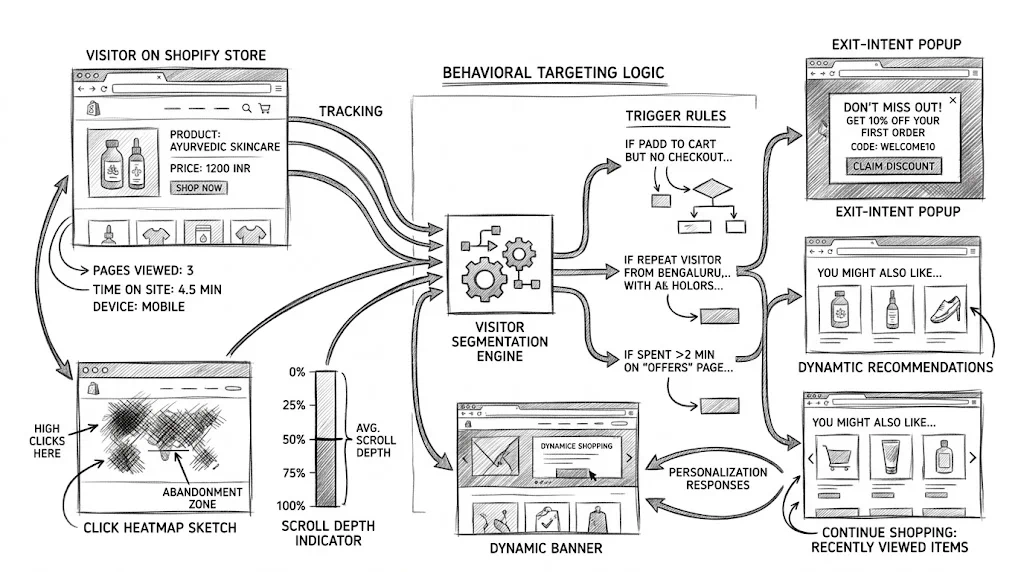
A shopper who views your protein powder three times, reads the ingredient list, and scrolls to the reviews section is telling you something: they're interested but not yet convinced. Behavioral targeting is the practice of reading these signals in real time and responding with the right content to push them past the hesitation point. For ecommerce, this is one of the highest-leverage personalization techniques because behavior signals intent better than any demographic attribute.
Behavioral targeting means using a visitor's actions — not their attributes — to determine what to show them. While demographic targeting says "show women 25–34 this banner," behavioral targeting says "show anyone who has viewed this product twice and hasn't added to cart this offer."
The shift from demographic to behavioral targeting is significant: behavior is a direct signal of current intent. A 55-year-old man spending 8 minutes on your skincare collection is demonstrating more purchase intent than a 28-year-old woman who bounced after 15 seconds — regardless of what demographic targeting would predict.
Key behavioral signals in ecommerce:
A visitor who views 5+ products in one session, uses the search bar, and returns within 48 hours is high intent but unconverted. Behavioral targeting for this segment:
A visitor who adds to cart and then visits other pages without checking out is a cart abandoner — but they're still on your site, which is your best opportunity to recover them. Behavioral targeting:
Someone who visited the same product page 3 times in a week is more likely to convert than a first-time visitor to that page. A/B test a targeted overlay for this segment: "You've looked at this before — want ₹100 off today only?" This converts returning product-specific visitors at 3–5x the rate of generic offers.
A customer who just completed a checkout is in a peak trust state — they've just confirmed they believe in your brand. Behavioral targeting on the thank-you page:
A visitor identified as a 3+ purchase customer deserves recognition. Behavioral targeting:
As third-party cookies phase out, behavioral targeting is shifting toward two approaches:
Session-based behavioral targeting: Reading on-site behavior within the current session only. No cookies needed — the visitor's actions in this session are enough to serve relevant content. This is already the most powerful form of behavioral targeting because current session behavior reflects current intent most accurately.
First-party data behavioral targeting: Using authenticated data (logged-in users, email subscribers who clicked through) to track cross-session behavior. A customer who logged in or clicked your email has given explicit consent for this tracking, making it both legally sound and effective.
First-party data personalization and cookieless personalization are the future-proof paths for behavioral targeting.
In CustomFit.ai, behavioral targeting rules follow an "if-then" structure:
Trigger (behavior): "If visitor has viewed the [Protein Whey] product page 2+ times in this session" Action (personalization): "Show exit-intent overlay with 10% discount code specific to this product"
Common behavioral rules to start with:
Not all behaviors are equal signals of purchase intent. Rank your triggers by intent strength:
| Behavior | Intent Signal | Recommended Action |
|---|---|---|
| Checkout page visit (no purchase) | Very high | Direct recovery offer, minimize friction |
| Cart add (no checkout) | High | Cart recovery prompt, shipping reminder |
| Product page 3+ views | High | Targeted discount, expert chat CTA |
| Collection page 5+ views | Medium | Curated recommendation overlay |
| Homepage return visit | Medium | "Welcome back" + new arrivals |
| Blog post read | Low | Content upgrade, newsletter signup |
Start with the highest-intent triggers for the fastest conversion impact.
COD behavior: Visitors who reach checkout but drop off at the payment step are often deterred by payment complexity. Behavioral targeting: if visitor exits at payment, show "COD available — no advance payment needed" reminder.
Festive browsing: Visitors who browse gift-category pages near Diwali or Raksha Bandhan are gift-intent shoppers. Show gift packaging and express delivery prominently to this segment.
Regional search behavior: Visitors who search in regional languages (Tamil, Bengali, Marathi) are demonstrating a language preference. Use this signal to show regional language content options or regional brand ambassadors.
Price sensitivity signals: Visitors who filter by "Price: Low to High" or who visit the sale section first are value-sensitive. Show them your best-value bundles and EMI options rather than premium SKUs.
Track these metrics per behavioral segment:
Use heatmaps and session recordings to understand how visitors interact with behaviorally-targeted content.
Related reading: Dynamic Content Personalization Explained | First-Party Data Personalization | Website Personalization Pillar