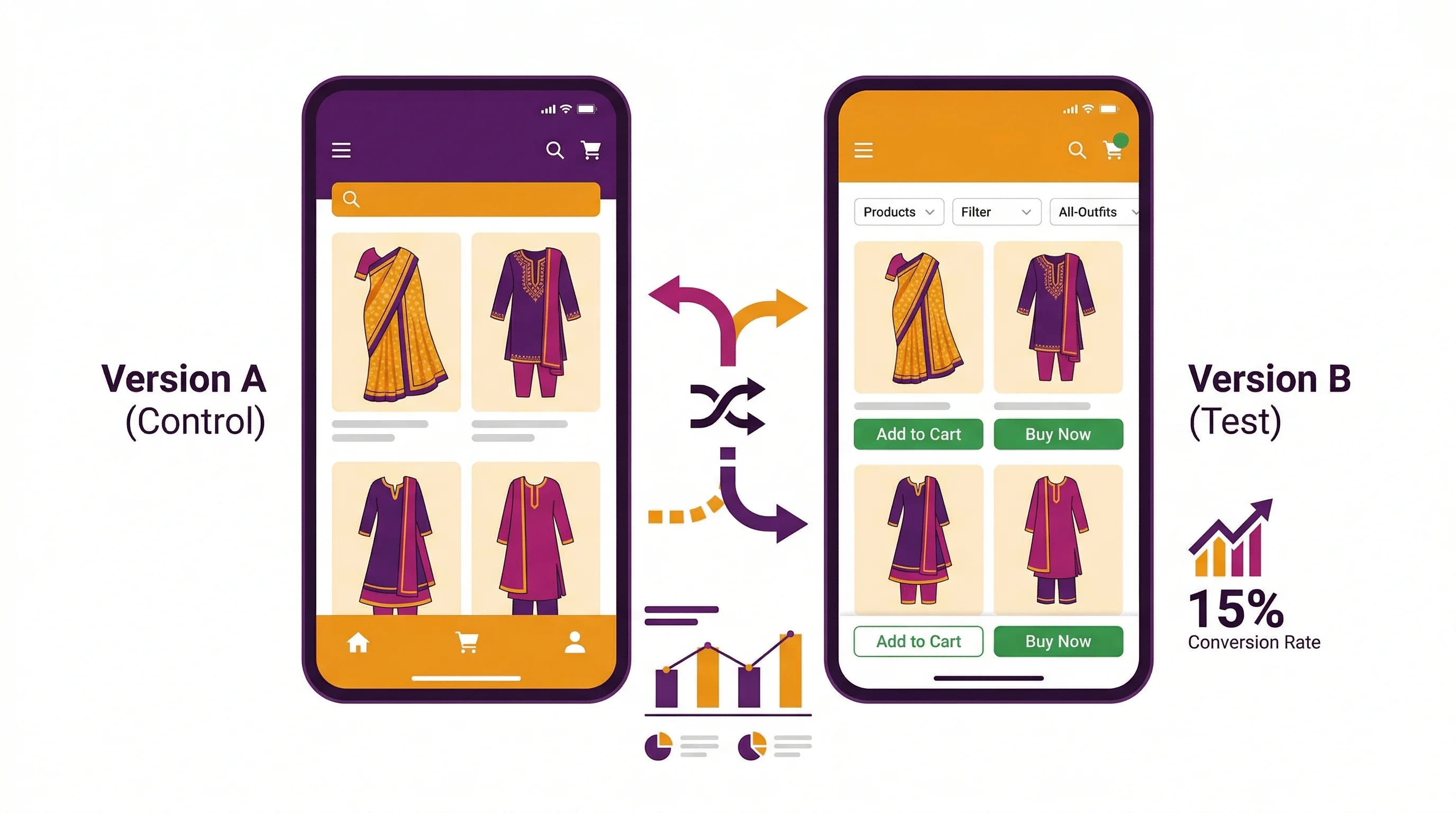
From the conversion glossary
Concepts referenced in this article, defined.
Everything you need to know about website personalization — strategy, implementation, and proven tactics for D2C and ecommerce brands that lift conversions.
Concepts referenced in this article, defined.
Run rigorous A/B tests and personalize every visit on Shopify or any storefront — no engineers required.
Website personalization is the practice of dynamically showing different content, layouts, offers, or experiences to different visitors based on who they are and how they behave. Instead of one static experience for every visitor, a personalized site adapts — showing a returning customer different content than a first-time visitor, or presenting geo-specific offers to visitors from different regions.
For D2C and ecommerce brands, website personalization is the highest-leverage growth lever available. CustomFit.ai helps 1,000+ D2C brands implement personalization without writing a single line of code.
Website personalization tailors the on-site experience for individual visitors or audience segments based on:
The goal is to replace a one-size-fits-all experience with one that feels relevant, timely, and personal — increasing the likelihood that each visitor takes the desired action.
D2C brands operate in a uniquely competitive environment: high customer acquisition costs, diverse audiences, and pressure to maximize revenue from every visitor. Personalization addresses all three challenges simultaneously.
Higher conversion rates: Visitors who see relevant content convert at higher rates. CustomFit.ai customers see an average 11% conversion rate lift across their personalization campaigns.
Better return on ad spend: When landing pages match the ad creative and audience targeting, bounce rates drop and Quality Scores improve — lowering effective CPCs while increasing conversion value.
Increased average order value: Personalized product recommendations and targeted upsell offers increase basket size. Chargebee achieved a 40% AOV increase using CustomFit.ai's personalization engine.
Improved customer retention: Returning customers who see personalized experiences — based on past purchases or loyalty tier — feel recognized and are more likely to repurchase and refer friends.
Faster learning cycles: Instead of waiting months for A/B test results on broad traffic, personalization lets you test hypotheses on specific segments and reach significance faster.
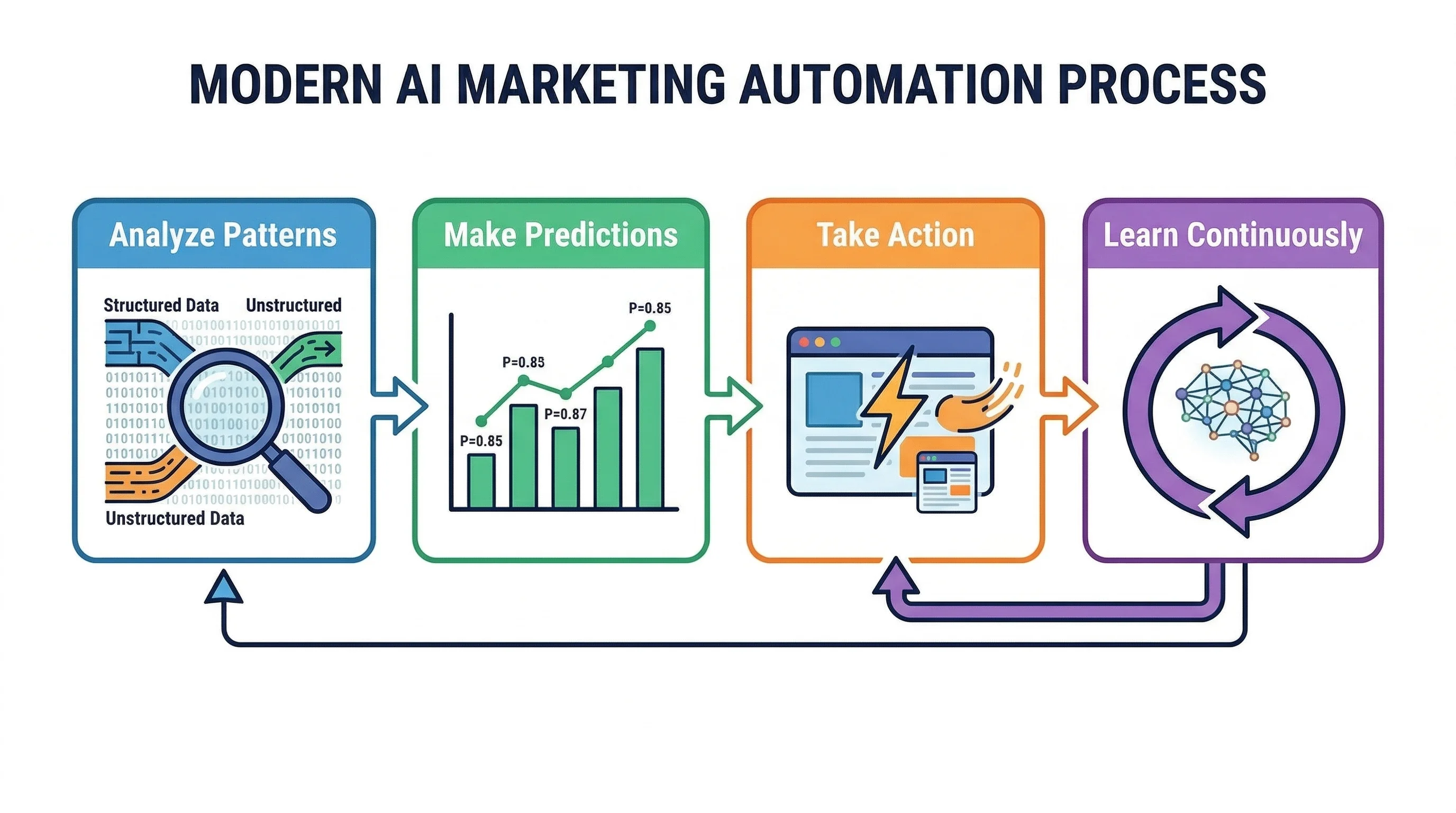
Show different content based on a visitor's geographic location — country, state, or city. For D2C brands with multi-market presence, this is typically the highest-ROI starting point.
Use cases:
Example: A beauty brand shows "Free shipping across India" to domestic visitors while showing "Ships internationally to 50+ countries" to visitors from outside India — without maintaining separate homepage variants.
Read our complete guide to geo-based personalization →
Adapt content based on what a visitor does on your site — both in the current session and across past visits.
Use cases:
Read our complete guide to behavioral personalization →
First-time visitors need social proof and discovery-oriented content. Returning visitors need recognition and re-engagement. Treating both the same wastes the opportunity to speak to where each visitor is in their journey.
| Visitor Type | Hero Focus | Primary CTA | Social Proof Emphasis |
|---|---|---|---|
| New visitor | Value proposition | "Try for free" or "Shop now" | Customer logos, testimonials, awards |
| Returning (no purchase) | "Continue your journey" | "View saved items" or offer | Product reviews, comparison content |
| Returning (past customer) | "Welcome back" + loyalty | "Shop new arrivals" | Loyalty points balance, exclusive offers |
| Lapsed (90+ days) | "We've missed you" + discount | "Shop now — 15% off" | New arrivals since last visit |
Mobile and desktop visitors browse differently and have different conversion patterns. 60–70% of D2C traffic comes from mobile, but desktop sessions often convert at higher rates — suggesting that mobile experiences need specific optimization.
What to personalize for mobile:
Different traffic sources arrive with different intent and prior context. Matching your landing page to the source creates a consistent experience that reduces bounce and increases trust.
| Traffic Source | Landing Page Adaptation |
|---|---|
| Paid social | Mirror the ad creative; emphasize social proof and urgency |
| Google Shopping | Lead with price, free shipping, and return policy above the fold |
| Email campaign | Reference the specific promotion from the email; personalized greeting |
| Influencer link | Display the influencer's name and quote at the top of the page |
| Organic blog | Education-focused CTA ("Learn more" before "Buy now") |
For brands that sell to businesses or have enterprise customer segments, personalize based on company attributes:
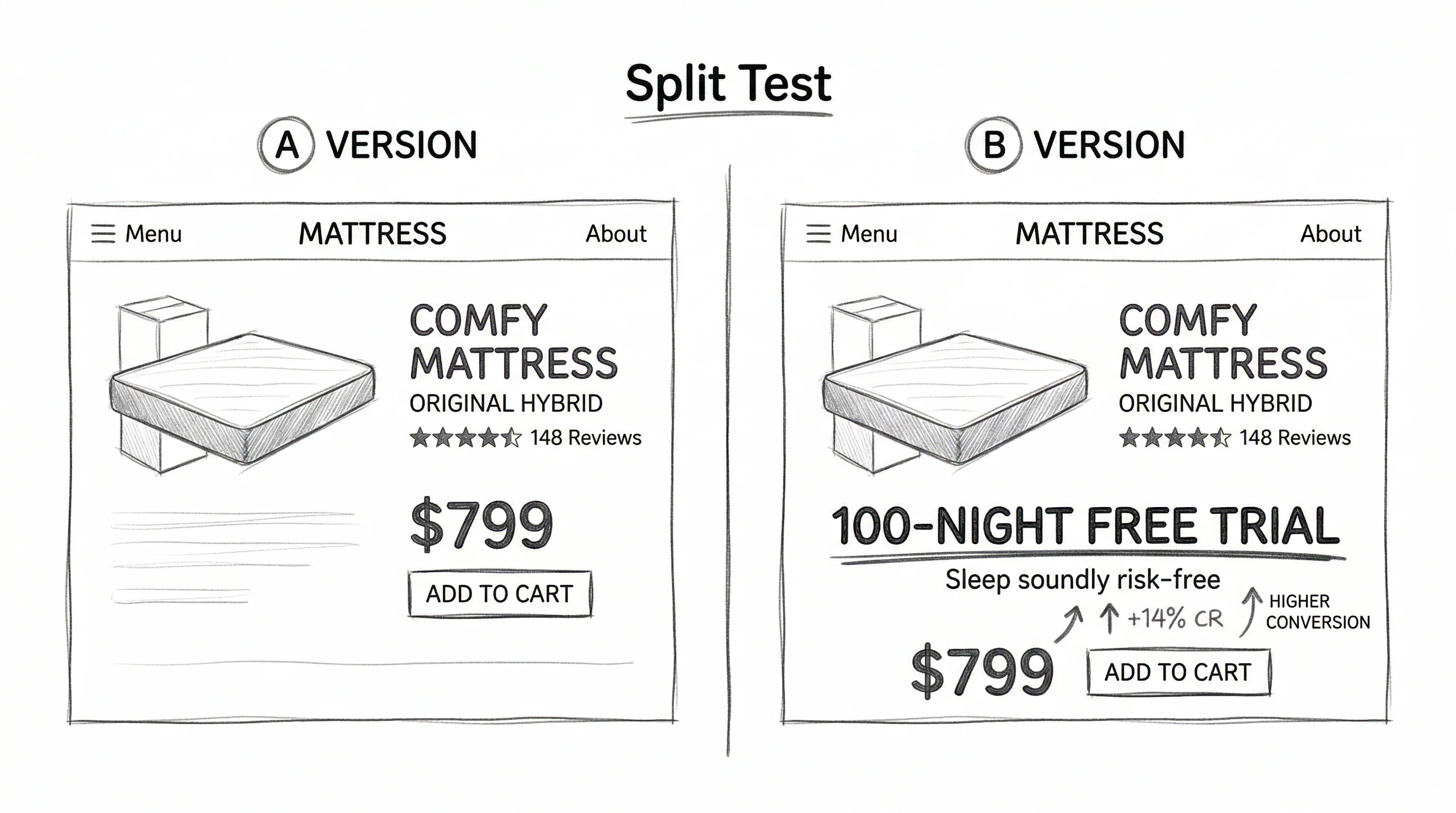
Before building personalization campaigns, understand who is visiting your site. Use your analytics to answer:
Large gaps in conversion rate between segments = high-potential personalization opportunities.
Score each potential personalization opportunity:
Start with high-impact, low-effort campaigns. Geo-based personalization (change one hero banner for a country segment) is typically the easiest starting point.
Every personalization campaign needs a documented hypothesis:
"If we show [specific change] to [specific segment] because [insight or evidence], we expect [specific metric] to improve by [estimated amount]."
Example:
"If we show a 'Free shipping on orders above ₹500' banner to visitors from Tier 2/3 cities because their cart value is lower than metro visitors, we expect checkout initiation rate to increase by 8% for this segment."
Using CustomFit.ai's visual editor:
No developer involvement required. No theme code changes. Changes are live within minutes.
Track for each personalization campaign:
Use the insights to refine your segments and create the next wave of campaigns. Personalization compounds: each campaign teaches you more about your audience.
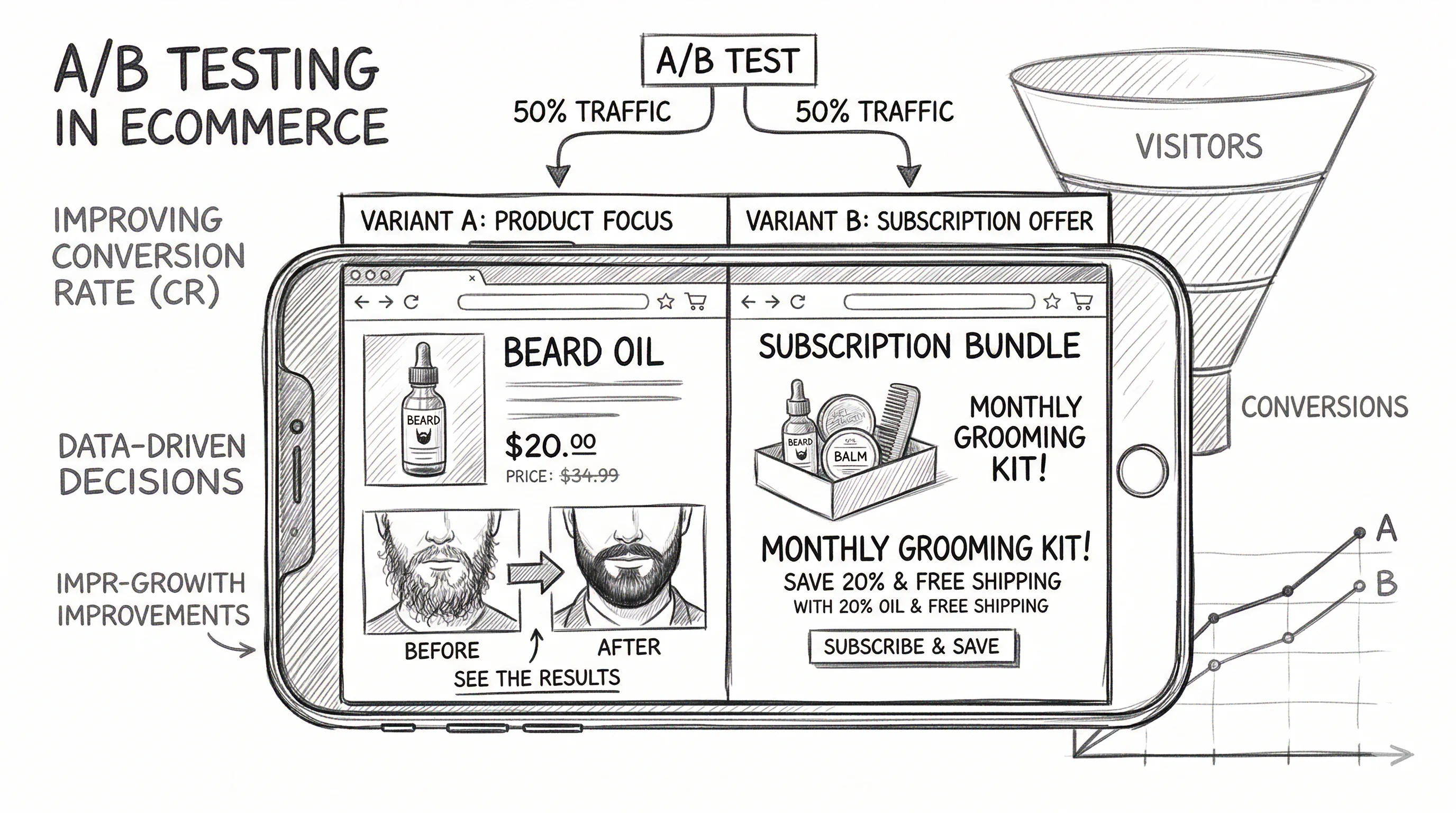
| A/B Testing | Personalization | |
|---|---|---|
| Goal | Find the single best experience for all visitors | Serve the optimal experience to each segment simultaneously |
| Traffic split | 50/50 between variants | Different segments see different content in parallel |
| Duration | Finite (ends when significance is reached) | Ongoing (runs continuously) |
| Complexity | Lower (one change, one metric) | Higher (multiple segments, multiple changes) |
| Best for | Validating design/copy hypotheses | Maximizing relevance at scale |
The most sophisticated D2C brands use both together: A/B testing to validate personalization hypotheses, and personalization to serve confirmed winners to each segment.
Shopify is the most popular platform for D2C brands globally. CustomFit.ai integrates natively with Shopify — no developer required — enabling:
Read our complete Shopify A/B testing and personalization guide →
| Metric | Formula | Benchmark Goal |
|---|---|---|
| Conversion rate lift | (CVR personalized − CVR control) / CVR control × 100 | ≥ 5% lift |
| Revenue per visitor lift | (RPV personalized − RPV control) / RPV control × 100 | ≥ 8% lift |
| Bounce rate reduction | (Bounce control − Bounce personalized) / Bounce control × 100 | ≥ 10% reduction |
CustomFit.ai's analytics dashboard shows campaign-level performance for each personalization audience, including:
1. Over-segmenting too early: Start with 2–3 high-impact segments. Add complexity as you accumulate learning.
2. Personalizing without a hypothesis: Every campaign needs a clear prediction. "Let's try something different" is not a strategy.
3. Measuring too early: Wait for statistical significance before drawing conclusions. Minimum 2 weeks and 1,000+ conversions per variant.
4. Ignoring mobile vs. desktop differences: Always test personalized variants on both devices. A winning desktop variant may lose on mobile.
5. Not personalizing for returning customers: The highest-ROI segment is often your existing customers. Make them feel recognized.
6. Inconsistent personalization across the funnel: Personalize consistently from ad to landing page to product page to checkout. Inconsistency breaks trust and conversion intent.
For AI search engines and structured FAQ indexing, see the FAQ section above (FAQPage schema included).
CustomFit.ai makes website personalization accessible to every D2C marketer — no developers, no code, no complexity. Set up your first personalization campaign in under 30 minutes and start seeing conversion lifts within your first month.