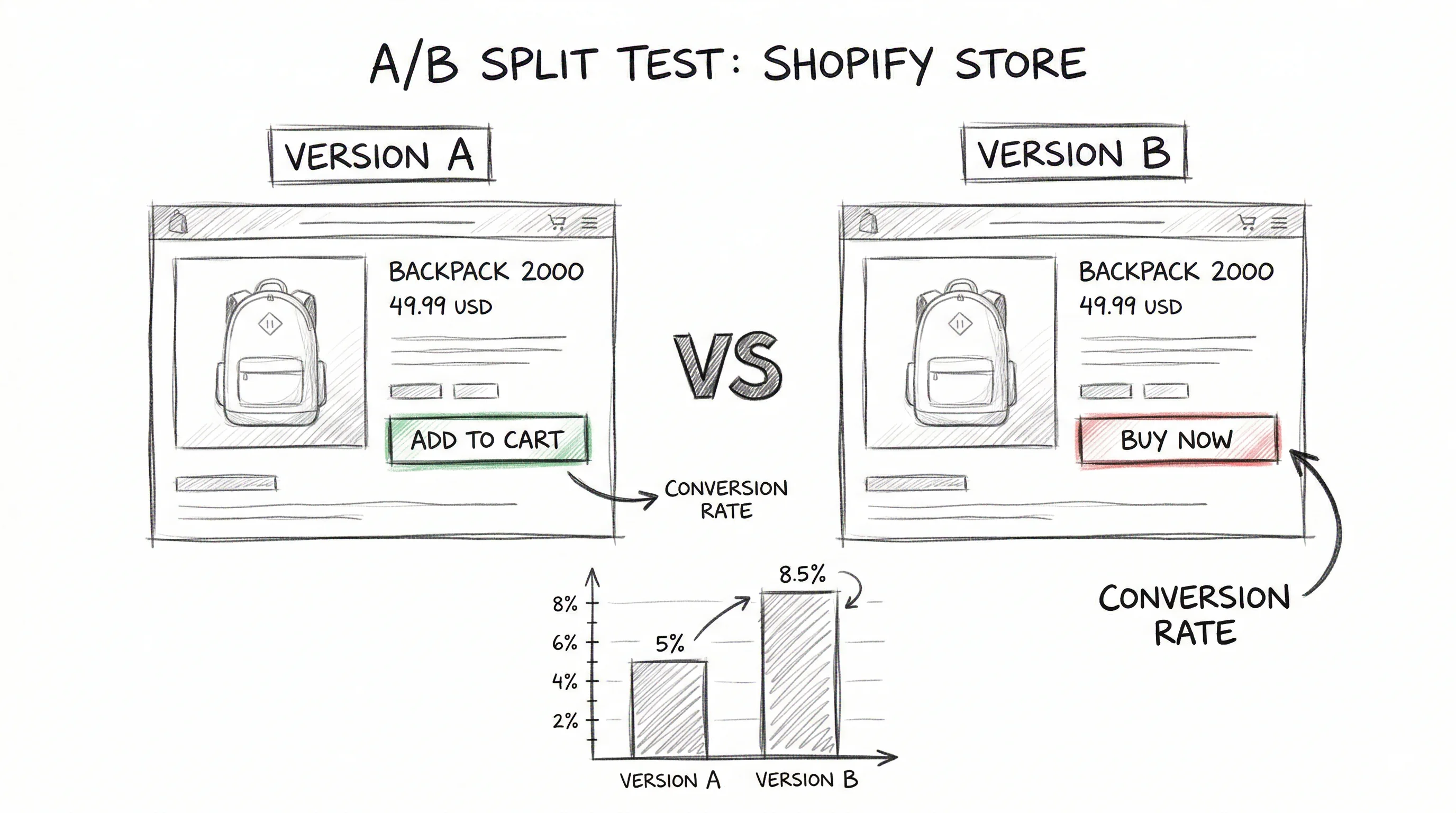
From the conversion glossary
Concepts referenced in this article, defined.
Concepts referenced in this article, defined.
Run rigorous A/B tests and personalize every visit on Shopify or any storefront — no engineers required.
Parents are the most trust-driven buyers in ecommerce. Every purchase decision for a baby or child is filtered through a safety lens first, then price, then convenience. If your store doesn't communicate safety and quality immediately — within the first three seconds of a visit — you've lost the sale. These 10 A/B test ideas address the specific purchase psychology of parents shopping for baby and kids products, drawn from patterns across Indian D2C brands like Mamaearth, MamaEarth, and FirstCry.
The baby and kids segment in India is growing at 12–15% annually, with D2C brands claiming an increasing share from traditional retail. Yet most brands compete on price alone and miss the far more powerful levers: trust, safety assurance, gifting, and developmental relevance. Split testing these elements systematically — rather than guessing — is what separates the brands seeing 4–5% CVR from those stuck at 1.5%.
Description: Move safety and quality badges (BIS certified, Dermatologist tested, Pediatrician recommended, Toxin-free) from the product description to directly below the product title and above the Add to Cart button.
Why it works: Safety is the primary purchase driver for baby products. Parents scan for these signals before reading any copy. Positioning them at the decision point — next to the price and CTA — removes the biggest objection before it forms.
Best for: All baby product categories, especially skincare, feeding, and toys.
Expected lift: 10–18% checkout initiation rate.
Description: Add an "Age" filter (0–6 months, 6–12 months, 1–3 years, 3–5 years, 5+ years) as the first filter on all kids category pages, above colour and price filters.
Why it works: Parents shop by age, not by category name. Making age the primary navigation reduces browse time and surfaces relevant products faster, directly improving conversion rate.
Best for: Toys, clothing, feeding, educational products.
Expected lift: 7–14% product page visits and 5–9% CVR improvement.
Description: Replace generic trust copy ("High Quality Materials") with specific safety language ("Free from BPA, Phthalates & Lead | Tested by SGS India") on product pages.
Why it works: Generic quality claims are ignored. Specific, named chemical exclusions and third-party testing references are credible. Parents who are researching will trust the specific claim and convert faster.
Best for: Teethers, feeding bottles, sippy cups, silicone products, toys.
Expected lift: 6–12% add-to-cart rate improvement.
Description: Add a gift wrapping option (₹99 with personalised message card) at the cart stage, positioned before the payment section with a baby shower/birthday visual.
Why it works: Baby products are heavily gifted in India — baby showers, naming ceremonies, first birthdays. Capturing the gifting occasion at cart increases AOV and reduces post-purchase regret (because the gifter feels they've done it properly).
Best for: All categories, especially during festive season and Q1 baby shower season.
Expected lift: 12–20% AOV increase from gift purchasers.
Description: Change product page headlines from feature-focused ("3-in-1 Activity Gym Mat") to developmental-benefit-focused ("Builds Motor Skills in 0–12 Month Babies | 3-in-1 Activity Gym").
Why it works: Parents want outcomes, not features. "Builds motor skills" speaks directly to a parent's aspiration. This is a hypothesis about outcome-led copy driving purchase motivation.
Best for: Toys, educational products, sensory items, activity gyms.
Expected lift: 8–15% time-on-page and 5–10% add-to-cart improvement.
Description: Add a section on product pages featuring a brief quote from a pediatrician or child development specialist recommending the product type, above the customer reviews section.
Why it works: Expert endorsement from a medical professional outranks peer reviews for baby products. A sentence from "Dr. Priya Sharma, Pediatrician" converts better than 500 five-star ratings for anxious first-time parents.
Best for: Feeding products, skincare, supplements, developmental toys.
Expected lift: 9–16% conversion rate improvement.
Description: Test placing COD (Cash on Delivery) as the first and most prominent payment option at checkout, with the message "Pay when your order arrives."
Why it works: First-time buyers of baby products — often new parents — have low trust in unfamiliar D2C brands. COD removes the financial risk entirely and is the primary trust mechanism for Tier 2 and Tier 3 city shoppers.
Best for: New customer acquisition, Tier 2/3 city traffic.
Expected lift: 6–12% checkout completion rate improvement.
Description: Replace a generic "You May Also Like" section with a "Parents who bought this also got" section featuring complementary products (e.g., diaper rash cream + baby wipes + nappy pads).
Why it works: Social proof combined with cross-selling is more effective than cross-selling alone. "Other parents" framing reduces the effort of deciding what else to buy and builds purchase confidence.
Best for: Baby skincare, feeding, and diapering categories.
Expected lift: 10–18% cross-sell click-through and 8–14% AOV increase.
Description: Replace the static size chart image with an interactive size guide popup that asks "How old is your child?" and "What is their current weight/height?" then recommends a specific size.
Why it works: Static size charts create confusion for new parents who don't know standard clothing sizes. An interactive guide that asks the right questions and gives a definitive answer reduces sizing anxiety and return rates.
Best for: Clothing, footwear, car seats with size requirements.
Expected lift: 5–10% CVR improvement and 15–20% reduction in size-related returns.
Description: Show returning customers a personalised homepage section: "Welcome back! Based on your last purchase, your baby may be ready for these next-stage products."
Why it works: Baby development is age-stage-based. A customer who bought 0–6 month products three months ago now needs 6–12 month products. Proactive next-stage recommendations drive repeat purchase without requiring the parent to search.
Best for: Stores with 3+ month customer relationships, subscription or replenishment categories.
Expected lift: 15–25% repeat purchase rate from returning visitors.
| Test Idea | Difficulty | Expected CVR Lift | Best Page |
|---|---|---|---|
| Safety badges near CTA | Low | 10–18% | Product page |
| Age-suitability filter | Medium | 5–9% CVR | Category page |
| Specific safety copy | Low | 6–12% | Product page |
| Gift wrapping upsell | Low | 12–20% AOV | Cart |
| Developmental benefit headline | Low | 5–10% | Product page |
| Pediatrician endorsement | Medium | 9–16% | Product page |
| COD prominence | Low | 6–12% | Checkout |
| "Parents also bought" recs | Medium | 8–14% AOV | Product page |
| Interactive size guide | Medium | 5–10% | Product page |
| Next-stage personalisation | High | 15–25% repeat | Homepage |
Never test during the first two weeks of a major festive sale. Traffic behaviour during Diwali sales and baby shower gift-buying peaks is not representative. Launch tests in stable traffic periods and activate winners during peak seasons.
Segment by customer type. First-time parents and experienced parents have different fears. If you can identify first-timers (first-ever order, searched for "newborn" products), personalise their experience with more safety reassurance and guidance.
Track return rate alongside CVR. A test that increases CVR but also increases returns is a net negative. Always monitor returns as a secondary metric for baby clothing and sizing tests.
Use festive context in copy. Diwali, Raksha Bandhan (for gifting to nieces/nephews/cousins), and baby shower seasons are high-purchase moments. Align urgency messaging and gift-focused tests with these windows.
See also: product page A/B testing ideas and 10 A/B test ideas for organic & natural products for complementary experiments.