From the conversion glossary
Concepts referenced in this article, defined.
Concepts referenced in this article, defined.
Run rigorous A/B tests and personalize every visit on Shopify or any storefront — no engineers required.
A/B testing in regulated industries means running controlled website experiments under the constraints of industry-specific legal, compliance, and ethical requirements — including healthcare, financial services, and wellness. Regulated industries can and should A/B test; the constraint is not whether to test, but what to test. Understanding which elements are freely testable and which require compliance review allows regulated brands to run active optimization programs without legal exposure.
Compliance anxiety leads many regulated brands to avoid A/B testing almost entirely. This is a strategic mistake. The vast majority of testable elements on most websites — layout, imagery, navigation, CTA text, social proof, pricing page structure, checkout flow — have no regulatory constraints whatsoever.
The elements that are actually restricted are relatively narrow: clinical claims, efficacy statements, legally mandated disclosures, and specific pricing structures for regulated products. Everything around those elements is freely testable.
Brands that conflate "regulated industry" with "cannot test anything" hand a significant CRO advantage to competitors who understand the distinction.
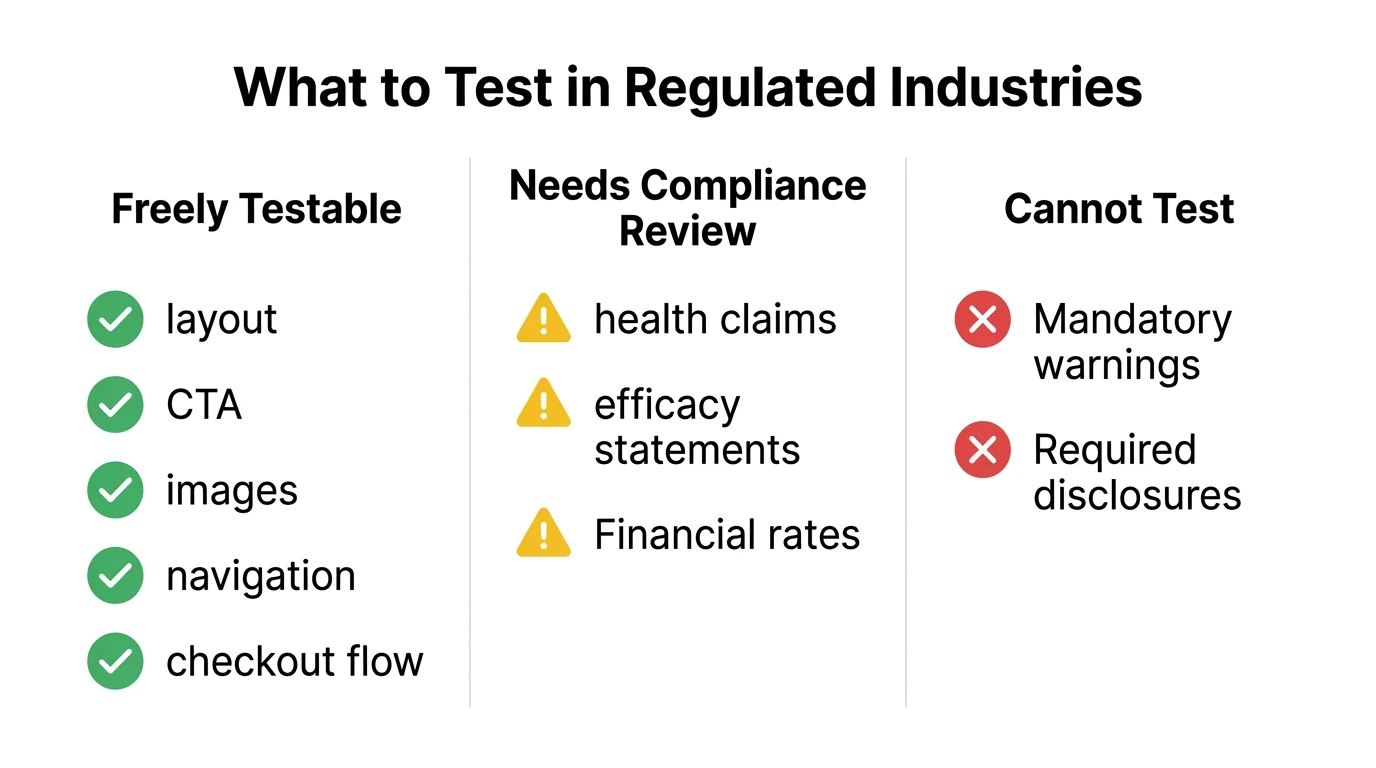
These elements can be tested in any regulated industry without legal review:
These require legal or regulatory sign-off in regulated industries:
Some elements are not testable because the content is mandated by regulation:
Brands selling AYUSH-regulated products or making health claims face FSSAI and CCPA requirements. Key constraints:
For brands like Kapiva (Ayurveda), Himalaya (herbal), or any nutraceutical brand: test the container (page structure, trust signals, navigation) freely. Get compliance review on the content claims before they enter your test variants.
For Practo, 1mg, Tata 1mg, PharmEasy-adjacent brands or any telemedicine app:
NBFC, insurance, and investment platforms (SEBI-regulated):
For cosmetic brands making efficacy claims (skin brightening, anti-aging, hair fall reduction):
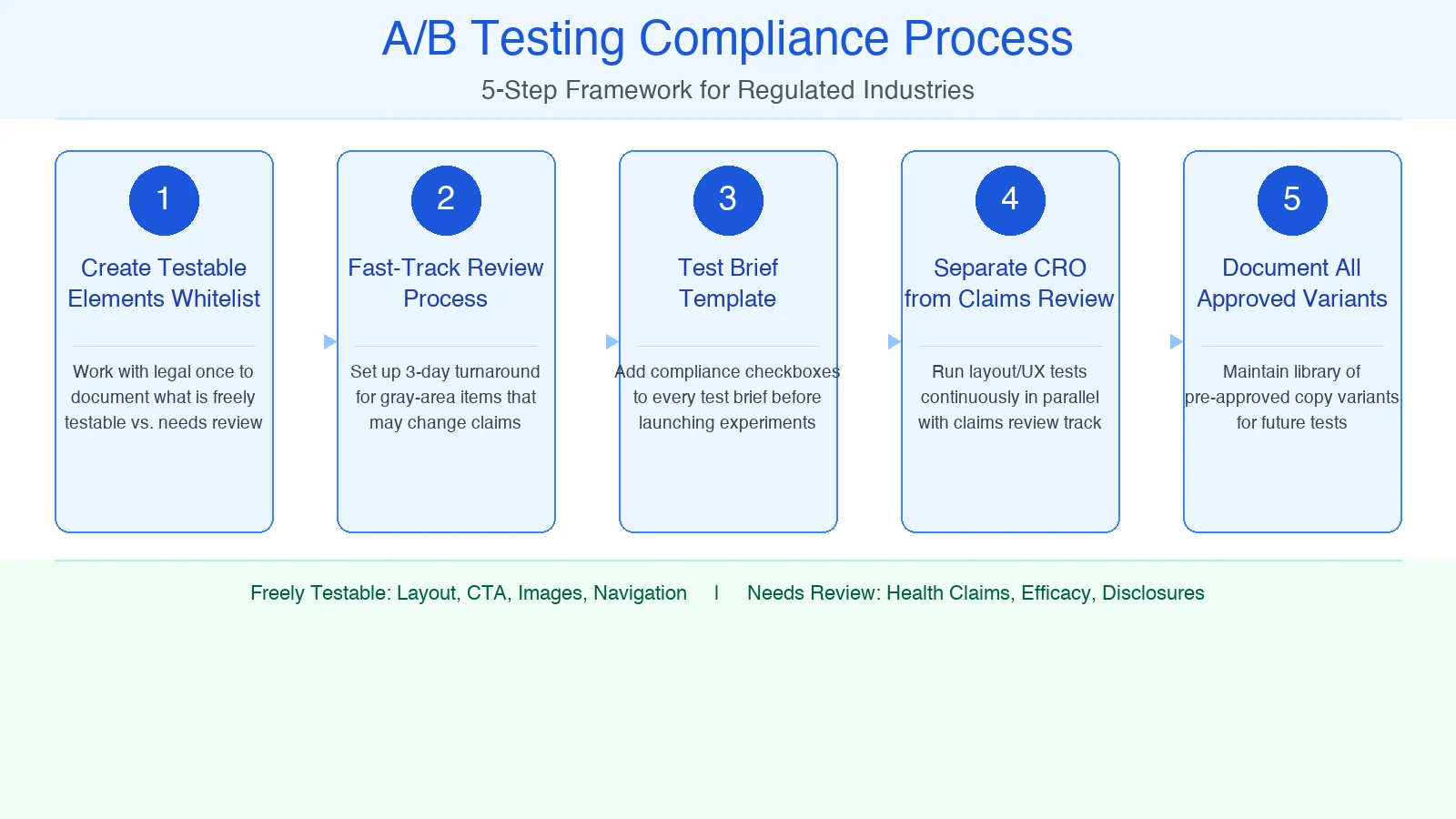
Step 1: Create a "testable elements" whitelist
Work with your legal team once to identify which page elements are freely testable. Document this as a whitelist your marketing team can refer to without going back to legal for every test.
Step 2: Establish a fast-track review process for gray areas
Not all tests require full legal review. Create a streamlined review for elements that change claims but may still be compliant — target a 3-day turnaround from the marketing team.
Step 3: Use a test brief template that includes compliance checkboxes
Every test brief should include: "Does this test change any regulated claims? Y/N. If Y, compliance review attached?" This creates institutional accountability without slowing down low-risk tests.
Step 4: Separate the CRO program from the claims review process
Your CRO program should not wait on claims reviews. Design your testing calendar so layout, UX, and non-claims tests run continuously while claims-adjacent tests move through a parallel review track.
Step 5: Document all approved variants
Maintain a library of compliance-approved copy variants. This speeds future tests by providing a pool of pre-approved language your team can use without restarting the review process.
India's Digital Personal Data Protection Act (DPDP Act, 2023) has direct implications for A/B testing programs:
For most ecommerce A/B testing programs, the practical implication is: ensure your consent banner explicitly covers analytics and personalization, and use a testing platform that can exclude users who have not consented.
Testing claims copy without review. A variant with an unsubstantiated efficacy claim may generate higher CVR in the test — but if deployed, it creates regulatory liability. Screen all test copy for claims before launch.
Not documenting what you tested. In a regulatory investigation or audit, you need to demonstrate what content was shown to which users. Maintain records of every A/B test, including start/end dates, traffic percentages, and variant content.
Assuming "it's just a test" is a legal defense. If 50% of your visitors see a non-compliant claim during a test, you have shown that claim to real users. The fact that it was a test does not reduce regulatory exposure.
Ignoring DPDP consent for test tracking. Running conversion tracking without a valid consent mechanism may violate DPDP requirements. Audit your analytics stack against your consent implementation.
Related reading: