From the conversion glossary
Concepts referenced in this article, defined.
Concepts referenced in this article, defined.
Run rigorous A/B tests and personalize every visit on Shopify or any storefront — no engineers required.
A/B testing subscription plans means running controlled experiments on your subscription pricing, plan structure, naming, and billing frequency to find which combination maximizes sign-up rates, plan value, and long-term retention. Subscriptions are the highest-LTV model available to D2C ecommerce brands — a subscriber paying ₹999/month for 12 months generates ₹11,988 versus a one-time buyer spending ₹1,500. Systematic testing of your subscription offer can lift sign-up rates 20–40% and shift buyers toward higher-value plans without any change to what you deliver.
Subscription tests measure multiple success metrics simultaneously:
These metrics can move in opposite directions. A lower-priced plan may generate higher sign-up rates but lower LTV. A longer billing period (annual vs. monthly) may reduce sign-ups but dramatically increases retained revenue. Effective subscription testing tracks all of these — not just the top-of-funnel conversion.
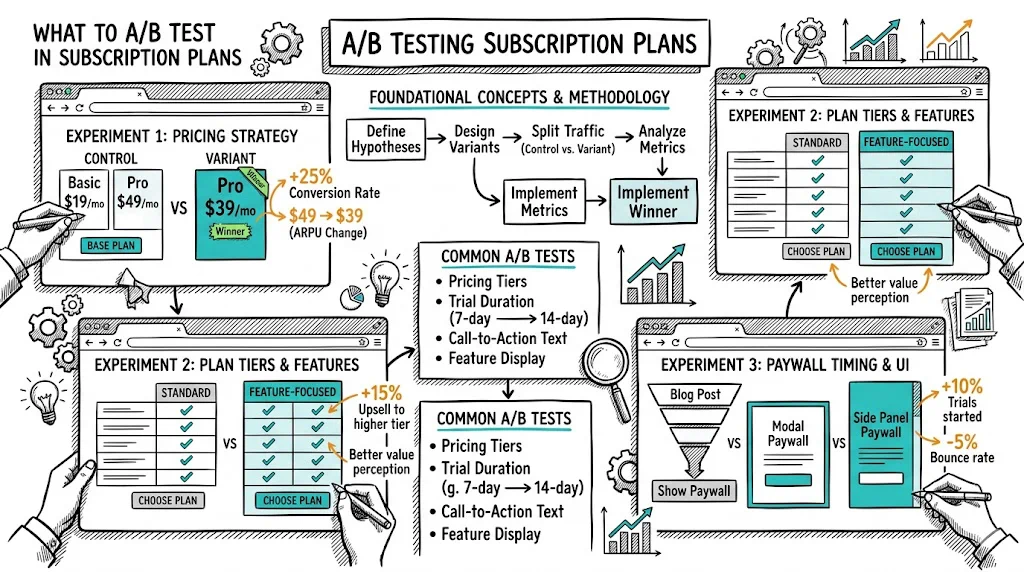
The pricing page is where subscription decisions are made. High-impact tests:
Number of plans:
Price anchoring:
Plan names:
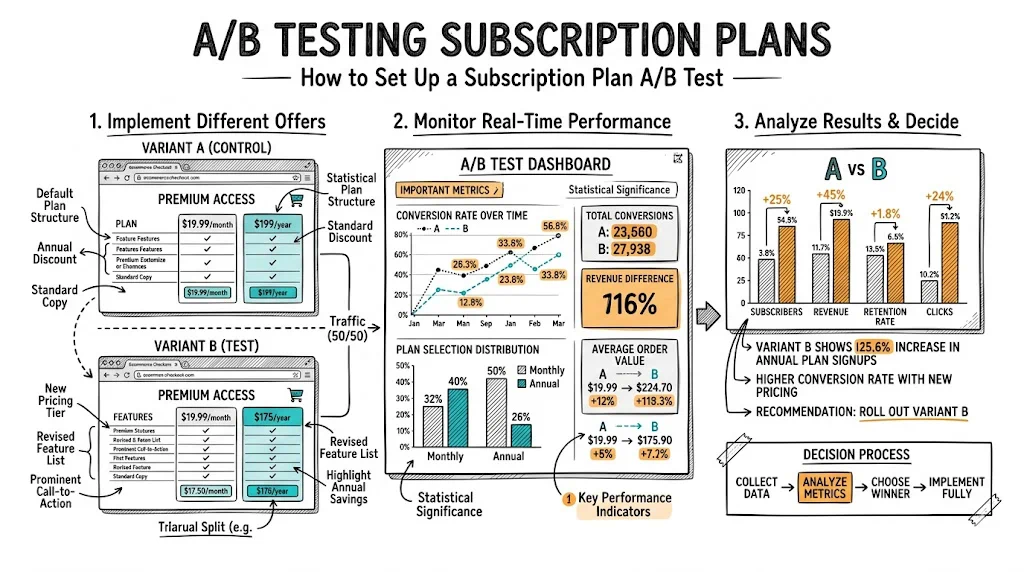
This is the highest-stakes subscription test because it affects both cash flow and LTV:
Kapiva and similar Indian wellness brands have found that defaulting the billing toggle to "annual" increases annual plan selection by 25–35% without significantly reducing total sign-up rate — pure LTV gain.
This is underused but extremely valuable:
Industry data: showing a pause option on the cancellation page saves 15–25% of would-be cancellations. Testing which option resonates with your specific audience is worth the experiment.
Step 1: Identify the metric hierarchy
Define your primary metric (sign-up rate), secondary metric (average plan value), and guardrail metric (first-billing-cycle retention). The test winner must improve primary and secondary metrics without significantly harming the guardrail.
Step 2: Create your hypothesis
Example: "I believe adding a ₹2,499/quarter option between monthly (₹999) and annual (₹3,999) will increase average plan value by 10% because buyers who reject annual commitment will choose quarterly as a middle ground."
Step 3: Build both variants
On Shopify, you can use subscription apps (ReCharge, Bold Subscriptions, Appstle) to create different plan structures. CustomFit.ai allows you to show different pricing page layouts to different visitor segments without developer work.
Step 4: Run for sufficient duration
For monthly billing tests: minimum 30 days For quarterly billing tests: minimum 90 days For annual billing tests: minimum 60 days of sign-ups followed by tracking for 90 days
Step 5: Analyze at the cohort level
Compare cohorts by: sign-up rate, plan distribution (% choosing each tier), and 30/60/90-day retention rates. Do not declare a winner based on day-7 sign-up rates alone.
| Test Type | Typical Lift |
|---|---|
| Adding middle tier to 2-tier structure | +15–25% avg plan value |
| Defaulting toggle to annual | +20–35% annual plan selection |
| "X months free" vs. "Save ₹X" | Varies by AOV — test required |
| Adding pause option to cancel flow | 15–25% cancellation saves |
| Aspirational plan names vs. generic | +8–12% sign-up rate |
Chargebee (B2B SaaS, not D2C) reported 40% AOV increases from pricing page optimization — demonstrating the scale of value available from subscription plan testing even in non-ecommerce contexts.
Testing only sign-up rate. A plan structure that increases sign-ups by 20% but reduces average plan value by 30% is a net loss. Always track revenue impact.
Calling winners based on sign-up rate alone. If your test changes billing frequency, you must track through at least one billing cycle before calling a winner — otherwise you are measuring sign-up rate, not subscription success.
Ignoring cancellation testing. Most subscription A/B testing programs focus entirely on the top of funnel. The highest-ROI experiments are often in the cancellation flow, where retaining even 5% of would-be churners competes favorably with any acquisition tactic.
Not testing across device types. Mobile subscription sign-up flows have different friction points than desktop. Run separate tests or ensure your test results are analyzed by device type.
Under-testing the annual billing framing. Annual plans dramatically improve LTV. Specific tactics for driving annual plan selection (framing, defaults, urgency) are among the most valuable subscription tests available.
Test subscription page personalization. First-time visitors respond to different messages than returning visitors. A returning visitor who has read your reviews needs a different pitch than someone landing from a Google ad. CustomFit.ai enables this without code.
Run upgrade tests for existing subscribers. Your current subscriber base is your easiest upsell opportunity. Test email and in-app messages promoting plan upgrades, additional products, or annual switching.
Test the subscription confirmation experience. Post-sign-up, the first message your new subscriber receives sets expectations. Test onboarding email subject lines, welcome offer framing, and first-delivery experience to improve early retention.
Connect plan testing to acquisition targeting. If you discover annual-plan buyers come predominantly from organic search, shift more acquisition budget toward those keywords. Testing opens pricing strategy improvements but also reveals acquisition insights.
Use cohort analysis for long-term validation. Sign-up rate and day-7 retention are leading indicators. Validate test winners with 90-day cohort LTV before making permanent changes to your subscription structure.
Related reading: