From the conversion glossary
Concepts referenced in this article, defined.
Concepts referenced in this article, defined.
Run rigorous A/B tests and personalize every visit on Shopify or any storefront — no engineers required.
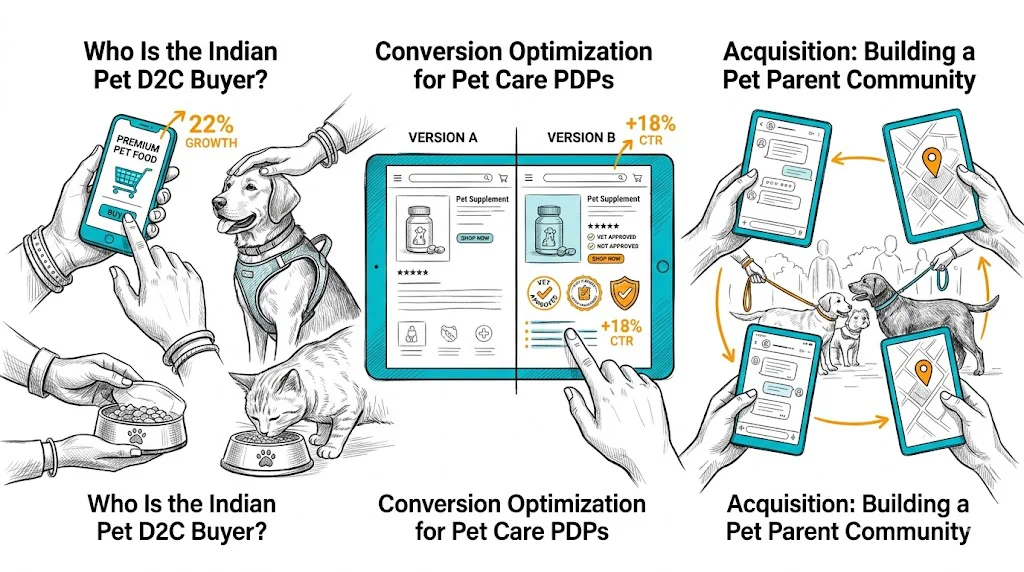
India's pet care D2C market is one of the fastest-growing segments in the country — pet ownership is up 22% since 2020, and Indian pet parents are shifting from local pet shops to D2C brands at an accelerating rate. These buyers are emotionally invested in their pets' wellbeing, willing to pay premium prices for quality, and exceptionally loyal to brands they trust. For pet care D2C brands, the opportunity is enormous — but so is the trust bar you need to clear. This guide covers the growth strategies that separate breakout pet care D2C brands from those that stay flat.
The typical Indian pet D2C buyer in 2025–26 is a millennial or Gen Z urban professional, often a first-time pet parent, with disposable income and high anxiety about doing right by their pet. They research extensively, read ingredient labels, seek vet recommendations, and are active members of online pet communities.
Key segments:
What drives purchase decisions:
Your product page needs to address the pet parent's protective instinct. They're not just buying a product — they're making a health decision for a family member.
Ingredients and nutrition panel: Display full ingredient lists with plain-language explanations. "Chicken: real deboned chicken, the #1 ingredient" outperforms a generic "high protein" claim. For supplements, show the exact dosage and what each ingredient does.
Veterinarian endorsements: A quote from a vet ("Recommended by 500+ veterinarians across India") near the add-to-cart button is the single highest-converting trust element for pet food and health products.
Breed/age/condition matching: "Is this right for my dog?" is the #1 hesitation on pet product PDPs. Add a breed/age/condition selector that shows which variants are right for each situation. Brands that added a simple "Find the right formula for your pet" quiz saw 20%+ lift in add-to-cart rates.
Real pet reviews: Text reviews are table stakes. Photo and video reviews from real pets — especially showing visible results (shinier coat, more energy, healthier skin) — are the most powerful social proof in this category.
The highest-performing acquisition channel for pet care D2C isn't paid ads — it's community. Pet parents are intensely social about their pets and trust peer recommendations above all else.
Instagram and YouTube pet communities: Build content around pet care education (not just product promotion). "What to feed a puppy in their first 6 months," "Signs your cat needs a vet visit," "Best exercises for apartment dogs" — educational content builds authority and attracts high-intent buyers.
Veterinarian partnerships: Tie-ups with pet clinics for product recommendation or sampling programs give pet care brands credibility that no amount of ad spend can buy. Even 20 veterinarian partners recommending your food creates a powerful trust signal.
Pet influencer marketing: Micro-influencers (5K–50K followers) with engaged pet communities outperform mega-influencers in conversion. A Golden Retriever Instagram account with 30K followers can drive extraordinary sales for the right dog food brand.
Festive season and birthday angle: Pet parents celebrate their pets' birthdays with the same enthusiasm as children's birthdays. "Celebrate your pup's birthday" gift sets (birthday hat, birthday cake treat, personalized bandana) are high-AOV, high-sharing moments. Diwali pet safety kits (calming treats, ear muffs for noise sensitivity) are a genuinely useful seasonal product.
Customer lifetime value in pet care is extraordinary because pets live 10–15 years and need consistent supplies throughout. Brands that set up life-stage retention systems early win disproportionate LTV.
Subscription for consumables: Pet food, treats, supplements, and grooming products are perfect subscription candidates — they run out predictably. Offer 12–15% off + free shipping on monthly plans. Retention at 6 months for pet food subscriptions is typically 60–70%.
Life-stage email sequences:
Birthday reminders: Capture pet birthday during signup. Send a "Your dog is turning 2!" email with age-appropriate product recommendations and a birthday discount. Open rates on birthday emails exceed 45% — they feel personal, not promotional.
Website personalization is particularly powerful in pet care because product relevance is so specific:
Pet profile personalization: Ask for species, breed, age, and health conditions during onboarding. Then personalize the homepage, email recommendations, and even the site search results to show only relevant products.
New visitor experience: Show vet endorsements, ingredient quality story, and community size prominently. New visitors need trust before they'll buy something their pet will consume.
Returning buyer experience: Show reorder reminders based on consumption timeline ("Your dog food should be running low — reorder now"), upcoming subscription renewal, and newly launched complementary products.
Related reading: D2C Brand Growth Pillar | Home Decor D2C India | RFM Segmentation for D2C Brands