From the conversion glossary
Concepts referenced in this article, defined.
Concepts referenced in this article, defined.
Run rigorous A/B tests and personalize every visit on Shopify or any storefront — no engineers required.
Luxury and premium brands face a paradox in conversion optimisation: the tactics that work for mass-market ecommerce — urgency timers, discount popups, scarcity alerts — actively damage brand perception for premium brands. Yet luxury D2C brands still leave significant revenue on the table through poor UX design, unclear value communication, and missed premium experience signals. These 10 A/B test ideas are designed specifically for brands where the goal is to increase conversion rate without for a second looking like they're trying to sell harder.
Luxury split testing focuses on elevation, not urgency. Where a mass-market brand tests "Buy Now — Limited Stock!", a luxury brand tests "Discover More — One of Only 50 Pieces." The hypothesis is different: not "will this create fear of missing out?" but "will this signal the exclusivity and craftsmanship that justifies the price?"
Description: Replace the product hero image with a 60–90 second craftsmanship video showing the making process — the hands of the artisan, the materials being selected, the process at each stage — before revealing the finished product.
Why it works: Premium buyers are paying for the story behind the object as much as the object itself. A craftsmanship video communicates why this product costs what it costs — and makes the price feel earned rather than arbitrary. This is the luxury brand version of a before/after.
Best for: Handcrafted jewellery, leather goods, ceramics, handwoven textiles.
Expected lift: 15–25% add-to-cart rate improvement from engaged viewers.
Description: For products above ₹15,000, replace the standard chat widget with a "Speak with Your Personal Client Advisor" option — available by appointment, with a name and photo of the advisor shown.
Why it works: High-net-worth buyers expect personal attention. A named client advisor (not a bot) signals that the brand values the relationship, not just the transaction. This is white-glove service as a conversion tool.
Best for: All products above ₹15,000.
Expected lift: 8–18% conversion rate from visitors who engage with the advisor option.
Description: Add a "Material Story" section on all product pages detailing the origin and certification of each primary material: "Kashmir Pashmina — Grade A, certified by the Pashmina Testing and Quality Certification Centre" with a photo of the source region.
Why it works: For premium buyers, provenance is a significant component of perceived value. Documenting material origins and certifications transforms a product page from a catalogue entry into a case for the purchase. It also differentiates from uncertified competitors.
Best for: Fine jewellery, cashmere, silk, leather, handcrafted objects.
Expected lift: 10–18% CVR improvement for provenance-aware buyers.
Description: For limited-run products, display "Edition 7 of 50" or "One of 24 Pieces This Season" as a prominent product attribute near the title.
Why it works: Genuine scarcity in luxury creates desirability — not FOMO in the supermarket sense, but the quiet knowledge that this is rare. A numbered edition is an exclusivity signal that justifies a price premium and accelerates purchase decisions from high-intent buyers.
Best for: Limited edition runs, seasonal collections, artisan one-of-a-kind pieces.
Expected lift: 12–22% CVR improvement on limited edition products.
Description: Add a gift configuration experience: choose the product, select signature wrapping style (3 options), add a handwritten message card (written by a calligrapher), optionally add a luxury candle or champagne accompaniment — with a premium personalisation fee (₹999–₹1,999).
Why it works: Luxury gift buyers want the experience to be extraordinary. A configuration tool that lets them design the gifting experience — rather than just checking a "gift wrap" box — converts at higher rates and significantly increases AOV.
Best for: All luxury products, especially during Diwali and wedding season.
Expected lift: 25–40% AOV increase from gifting buyers who use the configuration tool.
Description: Lead the image gallery with editorial lifestyle photography (the product in a curated interior setting, being worn at a defined occasion, alongside complementary objects) rather than a plain white-background packshot.
Why it works: Luxury is aspirational — buyers are purchasing a lifestyle as much as an object. Editorial photography that communicates the world the product belongs to converts better with premium buyers than clinical packshots. The packshot says "this is what it looks like." The editorial says "this is who you become."
Best for: All luxury categories.
Expected lift: 8–15% time-on-page and 6–12% add-to-cart improvement.
Description: For products above ₹50,000, replace "Add to Cart" with "Reserve This Piece" as the primary CTA, followed by a brief reservation flow (name, email, preferred call time).
Why it works: Luxury purchases above a certain threshold are relationship decisions. "Reserve This Piece" signals that the brand treats the purchase as a significant moment — not a click-through transaction. The reservation flow also creates a warm lead for the client advisor.
Best for: High jewellery, luxury watches, bespoke furniture, art.
Expected lift: 15–25% reservation rate (warm lead) vs. cart abandonment comparison.
Description: Present EMI or payment plan options with premium language: "Spread the joy of ownership — flexible payment plans available from ₹2,499/month, 0% interest, through our banking partners."
Why it works: EMI for luxury must be positioned as a service, not a discount. The language of "ownership" and "joy" maintains the premium register while making high-ticket products accessible to a broader segment of premium buyers. Test this against no EMI display and against standard "₹X/month EMI" copy.
Best for: All products above ₹20,000.
Expected lift: 12–20% checkout initiation rate improvement.
Description: Show a preview image of the Certificate of Authenticity that accompanies each product, with a QR code that links to a real-time authentication database.
Why it works: Counterfeit anxiety is real for luxury purchases — especially online. A Certificate of Authenticity with a scannable QR code that customers can verify post-purchase dramatically reduces this anxiety and positions your brand as the trustworthy source for authentic product.
Best for: Fine jewellery, limited edition art, heritage craft products.
Expected lift: 8–14% CVR improvement for buyers who have previously purchased counterfeit products or are first-time luxury online buyers.
Description: On the product page and at checkout, show customers what their post-purchase experience will look like: "Your order arrives in a signature [Brand] box with tissue paper, a handwritten note, and a care card. You'll receive an unboxing preview from our team on WhatsApp before delivery."
Why it works: The unboxing experience is a key part of luxury ownership. Showing buyers what they'll receive — before they've purchased — creates anticipation and makes the price feel proportionate to the total experience, not just the object.
Best for: All luxury D2C brands with premium packaging.
Expected lift: 7–13% checkout completion rate improvement.
| Test Idea | Difficulty | Expected CVR Lift | Best Page |
|---|---|---|---|
| Craftsmanship video | Medium | 15–25% | Product page |
| Concierge chat (named advisor) | High | 8–18% assisted | Product page |
| Material certification section | Low | 10–18% | Product page |
| Limited edition numbering | Low | 12–22% | Product page |
| Premium gifting config tool | High | 25–40% AOV | Product/Cart |
| Editorial photography | High | 6–12% | Product page |
| "Reserve This Piece" CTA | Medium | 15–25% leads | Product page |
| Ownership spread EMI language | Low | 12–20% | Product page |
| Certificate of Authenticity | Medium | 8–14% | Product page |
| Post-purchase experience preview | Low | 7–13% | Product/Checkout |
Never test discounts for luxury brands. Any test involving price reduction, clearance language, or percentage-off messaging will damage brand equity. Focus exclusively on experience elevation, exclusivity, and service signals.
Measure NPS alongside CVR. For luxury brands, a test that marginally increases CVR while damaging brand perception (measured through post-purchase NPS) is a negative outcome. Always measure customer experience quality alongside conversion rate.
Keep statistical significance standards high. With lower traffic volumes and higher AOV, luxury brand A/B tests need more time to reach significance. Aim for 95% confidence and don't rush calls.
Invest in photography as a test variable. For luxury brands, photography quality is a more important conversion variable than copy or layout. Test premium editorial shoots against your current images — the ROI on photography investment is often the highest of any test.
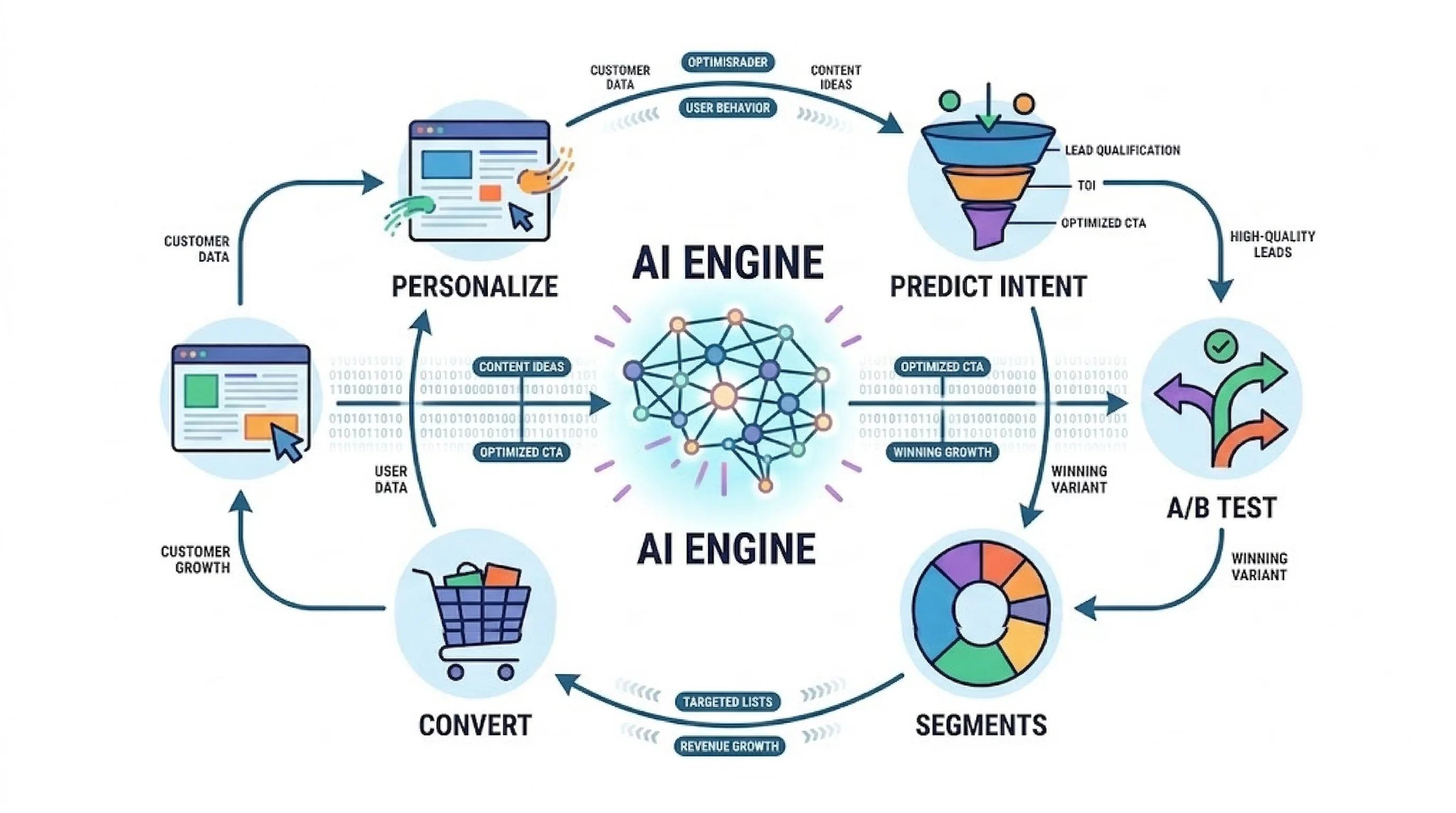
Use CustomFit.ai's audience segmentation to identify returning vs. new premium buyers. Returning buyers need social proof from their past experience; new buyers need trust signals and provenance. These require different page experiences.
Related: 10 A/B test ideas for perfume & fragrance stores and 10 A/B test ideas for ethnic wear stores for adjacent premium category experiments.