
From the conversion glossary
Concepts referenced in this article, defined.
Concepts referenced in this article, defined.
Run rigorous A/B tests and personalize every visit on Shopify or any storefront — no engineers required.
A/B testing your headlines is one of the highest-ROI experiments you can run — headlines determine whether visitors engage with your product page, homepage, or landing page at all. A well-structured headline test can lift engagement metrics by 15–30% without changing anything else on the page. The 20 formulas in this guide cover the headline types that consistently win in ecommerce testing, with examples from Indian D2C categories.
Headlines are the first thing visitors read. On a product page, the headline (usually the product name + tagline) is the primary filter — visitors decide whether to scroll further based on it. On a landing page for a Diwali campaign or a new product launch, the headline carries even more weight because there's no existing brand context to fall back on.
Before the formulas, understand why existing headlines usually lose to better alternatives:
They're product-focused, not benefit-focused. "Vitamin C Serum 20%" tells you what it is, not why you should care. "Brighter skin in 14 days — or your money back" tells you what you'll get.
They're generic. "Best skincare for you" could be from any brand. It doesn't select the right audience or repel the wrong one.
They assume knowledge the visitor doesn't have. "Now with Niacinamide" means nothing to a first-time buyer. "Reduces dark spots and pores in 21 days" does.
They don't match search intent. If someone searched "anti-aging serum for 30s" and your headline says "Luxury Youth Formula," you've created a mismatch that drives bounces.
Formula 1: [Specific Result] in [Timeframe]
Formula 2: [Main Benefit] without [Main Objection]
Formula 3: The [Result] [Product Category] for [Specific Audience]
Formula 4: [Number] Women/Men in [City/Region] Use [Product] for [Benefit]
Formula 5: Finally: [Benefit the audience has struggled to achieve]
Formula 6: Why [Common Belief/Behavior] is Wrong
Formula 7: What [Authority/Expert] Never Tells You About [Topic]
Formula 8: The [Counterintuitive Claim] That Actually Works
Formula 9: [Shocking Fact/Stat] That Will Change How You [Action]
Formula 10: As Seen in [Publication] / Loved by [Number] Customers
Formula 11: [Real Customer Result]: "I saw [specific result] in [timeframe]"
Formula 12: The [Product] That [High-Profile Brand/Person] Trusts
Formula 13: Only [Number] Left — [Benefit]
Formula 14: [Offer] Ends [Specific Time] — [What They'll Miss]
Formula 15: Get [Benefit] for Less Than [Price Comparison]
Formula 16: [Price] for [Quantity/Duration] — [Benefit]
Formula 17: [Better/Cheaper/Faster] Than [Alternative]
Formula 18: Tired of [Pain Point]? Try [Product] Instead
Formula 19: What If Your [Problem] Could Be Fixed in [Timeframe]?
Formula 20: Is [Common Approach] Actually [Damaging/Ineffective]?
Step 1: Identify the headline location Product page H1, landing page hero, homepage headline, or email subject line. Each requires a slightly different approach.
Step 2: Choose your metric
Step 3: Select 2–3 formulas that address different angles Don't test "headline A" vs. "headline B" where both are benefit-led. Test a benefit-led headline against a social-proof headline against a question-format headline. You'll learn which type of headline resonates, not just which specific words.
Step 4: Write 3–5 candidates per formula, then pick the strongest Write at least 10 headline options before selecting 2–3 to test. The first draft is rarely the best.
Step 5: Set up the test and run it to completion In CustomFit.ai, headline tests take under 5 minutes to set up using the visual editor. Change the H1 text for each variant and let the platform assign traffic and track results.
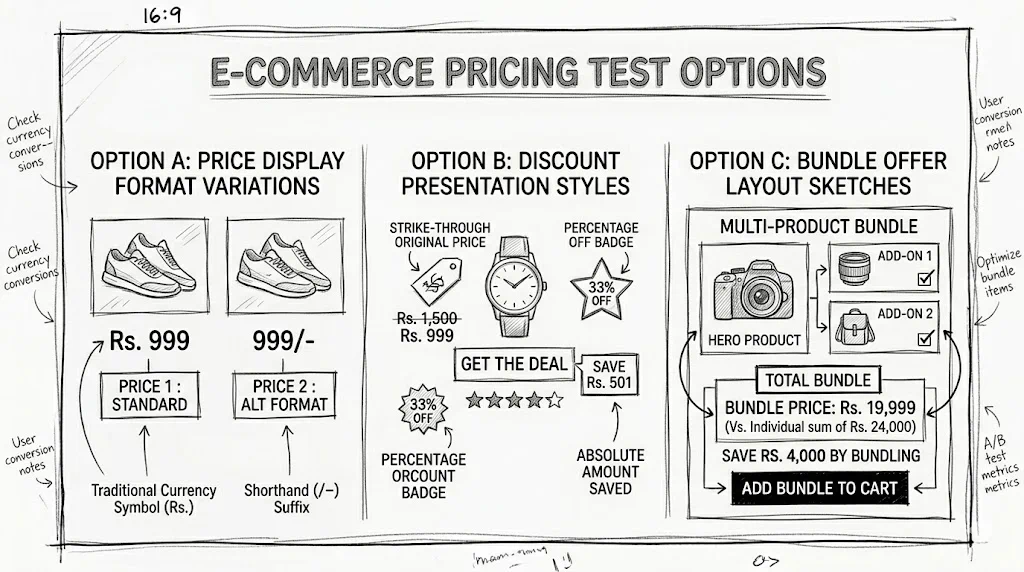
Use Indian pricing anchors: ₹ anchors hit differently than $ anchors for Indian consumers. "Under ₹500" is a meaningful threshold. "Under ₹999" vs. "just ₹899" — test these.
Test regional specificity: "For Indian skin" vs. "for South Asian skin" vs. "for brown skin" — these resonate differently with different audience segments. A brand like Sugar Cosmetics or Nykaa would find significant lift in this kind of targeting.
Test COD messaging in headlines: "COD available" or "try before you pay" framing in headlines can significantly lift add-to-cart rates for categories where trust is low (new brands, new categories).
Test festive season triggers: During Holi, Diwali, Raksha Bandhan, and wedding season, headlines that reference the occasion outperform generic headlines — but only if the reference feels genuine, not forced.
Never test more than 3 headline variants simultaneously on low-traffic pages — you'll split your traffic too thin and tests will take forever to reach significance.
Test the headline type before the specific wording — benefit-led vs. social proof vs. urgency is a more informative first test than "version A wording" vs. "version B wording."
Read the losing headlines too — they tell you what your audience doesn't respond to, which is as valuable as knowing what they do.
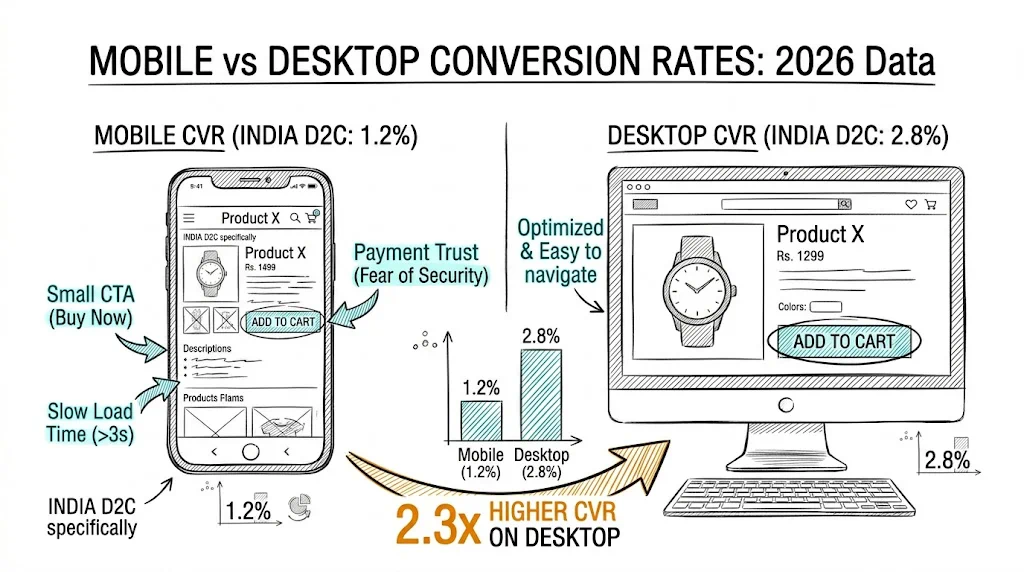
Run headline tests on mobile specifically — the first 10 words of a mobile headline often determine engagement. Desktop headlines can be longer.
Keep a headline swipe file — when a competitor headline catches your attention, save it. Test variants of competitor headlines against your own.
Combine winning headline formula with winning body copy — a headline test tells you the best entrance; follow up with a body copy test to maximize the full page.
Use the headline test winner to inform your paid ad copy — winning product page headlines often translate directly to high-performing Facebook and Instagram ad headlines.
Related reading: A/B Testing Images | A/B Testing CTAs | A/B Testing Social Proof | Conversion Rate Optimization | A/B Testing Pillar Guide