From the conversion glossary
Concepts referenced in this article, defined.
Concepts referenced in this article, defined.
Run rigorous A/B tests and personalize every visit on Shopify or any storefront — no engineers required.
Pricing pages are the highest-leverage page you can optimize — they're where purchase decisions convert into revenue. Small changes to price anchoring, plan tier presentation, or CTA copy can shift purchase mix significantly and lift revenue per visitor without changing your underlying product or pricing structure. A/B testing pricing pages is standard practice at high-growth SaaS companies and increasingly common at D2C ecommerce brands testing bundle pricing, subscription tiers, and quantity discounts.
This guide covers pricing page A/B testing for both SaaS subscription pages and ecommerce pricing displays — with specific considerations for Indian D2C brands where price sensitivity, rupee-specific framing, and EMI displays are critical variables.
Pricing pages require more care than typical CRO tests because:
Visitor intent is highest. Someone on your pricing page is considering purchasing. Every element they see has immediate commercial implications.
Trust damage is possible. If visitors sense they're being manipulated (fake urgency, misleading price comparisons), it destroys trust and can cause social media backlash — particularly in the Indian D2C community where brand communities are vocal.
COD and EMI complexity. For Indian ecommerce, the "real price" to a consumer depends on payment method: COD has no surcharge in most cases, credit cards may offer 0% EMI, and certain UPI wallets offer cashback. Pricing page A/B tests must account for this.
Statistical significance takes longer. Pricing page traffic may be lower than product page traffic, and the conversion rate (purchase decision from pricing page) is typically lower than from product pages. Factor this into your test duration planning.
What to test:
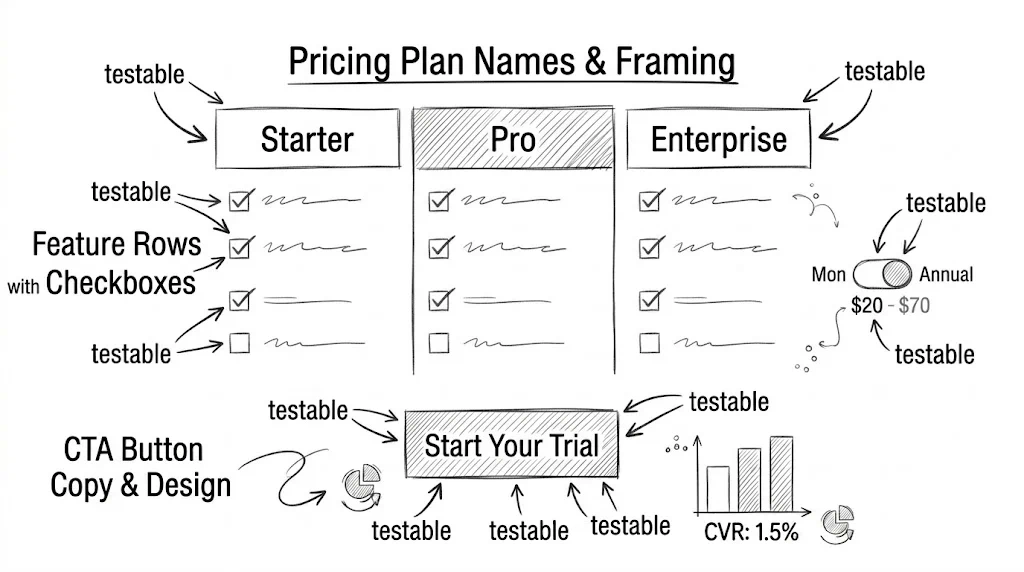
Why it matters: More tiers give visitors more decision points. Too few tiers can leave value on the table (high-value customers self-select to your top tier if there's an appropriate offering). Too many tiers cause decision paralysis.
CustomFit.ai's own pricing: CustomFit.ai uses a simple $99/month starting price — one clear entry point, rather than a complex tiered structure that confuses D2C founders evaluating their options.
What to test:
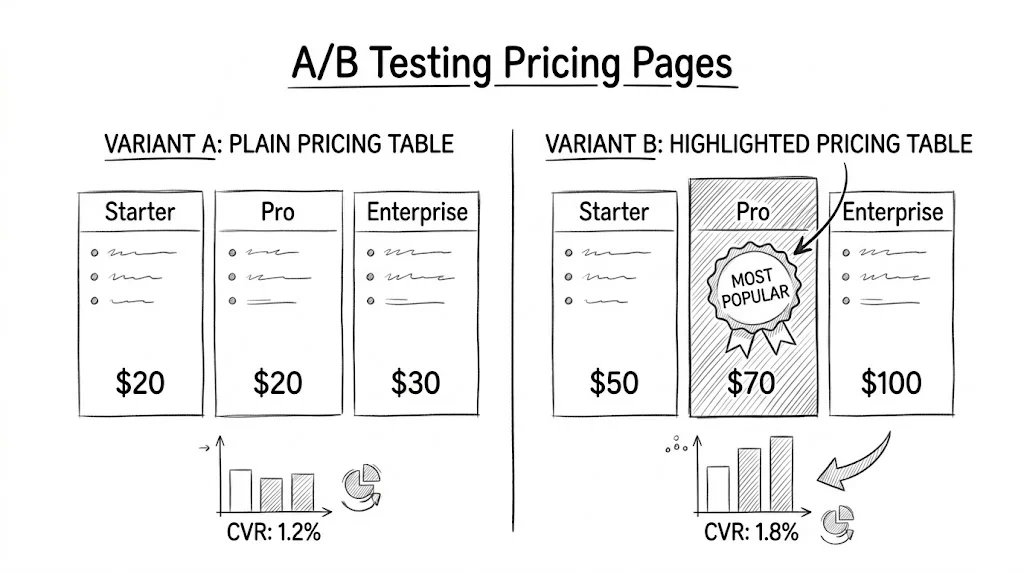
Expected finding: A "Most Popular" badge increases selection of the highlighted plan by 15–30% in most SaaS contexts. Test which plan to highlight — it doesn't have to be your highest-priced tier.
What to test:
Expected finding: Showing annual pricing by default increases annual plan uptake by 20–40% but can reduce total conversion rate. The net effect on revenue depends on your LTV differential between annual and monthly customers. Test and calculate the NPV impact.
What to test:
What to test:
For trial-based SaaS: "No credit card required" in or near the CTA is one of the highest-lift additions for trial sign-ups. Test whether this increases trial conversion rate without significantly increasing payment friction at conversion.
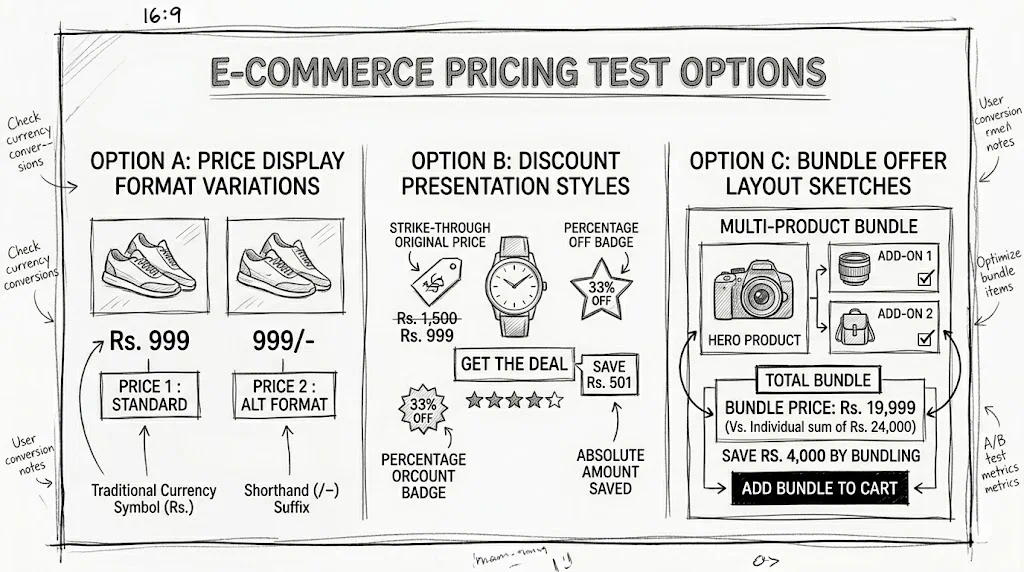
For D2C ecommerce, "pricing pages" include product pages with pricing displays, bundle/kit pages, and subscription vs. one-time purchase options.
What to test:
Indian D2C context: ₹-value savings ("Save ₹300") typically outperforms percentage savings ("20% off") for orders under ₹2,000. For premium products (₹3,000+), percentage discounts can feel more significant.
What to test:
High-impact for Indian D2C: Chargebee saw 40% AOV improvement with bundle optimization. Testing "Complete Skincare Set" (3 products bundled) vs. individual product pages can replicate this for beauty brands.
What to test:
For Indian D2C supplement and wellness brands (Kapiva, Himalaya): Subscription models are growing. Test whether leading with subscription pricing (and its savings) vs. one-time pricing affects conversion and subscription uptake.
What to test:
For products priced ₹1,500+: EMI messaging prominently displayed near the price can reduce price-based abandonment significantly. Test showing EMI option with the monthly amount up front.
Show a higher-priced option to make your primary product feel like better value.
What to test:
Avoid: Showing genuinely different prices to different visitors (where some pay more for the same product). This is legally gray and ethically problematic.
Acceptable: Testing different price displays (how the price is shown), price framing (₹ vs. %, per day vs. total), and plan structures (which options are presented) — not different actual prices for identical products.
Always test with consistent visitor experience: Use a proper A/B testing tool (CustomFit.ai) that assigns visitors to variants at the session level and maintains consistency. A visitor who sees Version A of pricing on their first visit should see Version A on their second visit.
SaaS pricing page:
Ecommerce pricing display:
Test price anchoring before design — adding a higher-priced option (or a "value bundle") is typically the highest-lift pricing page change and requires no design work.
Display savings in ₹ for Indian audiences first, then test against % — absolute rupee savings tend to be more impactful for orders under ₹2,000.
Test EMI messaging prominently for products above ₹1,500 — "As low as ₹X/month" changes the mental math for Indian consumers considering price-sensitive purchases.
Never show genuinely different prices to different visitors — test display and structure, not the actual price.
Measure plan mix, not just conversion rate — a pricing test that increases total conversion by 5% but shifts everyone to your lowest tier might reduce revenue. Track revenue impact.
Test with statistical significance before pricing changes — pricing pages often have lower traffic than product pages. Use a sample size calculator before launching.
Document your pricing logic clearly — pricing test variants can create customer service confusion if visitors see different page versions and ask about discrepancies. Brief your support team.
Related reading: A/B Testing Cart Pages | Urgency and Scarcity Tactics | CRO ROI | Conversion Rate | A/B Testing Pillar Guide